North India Statesman
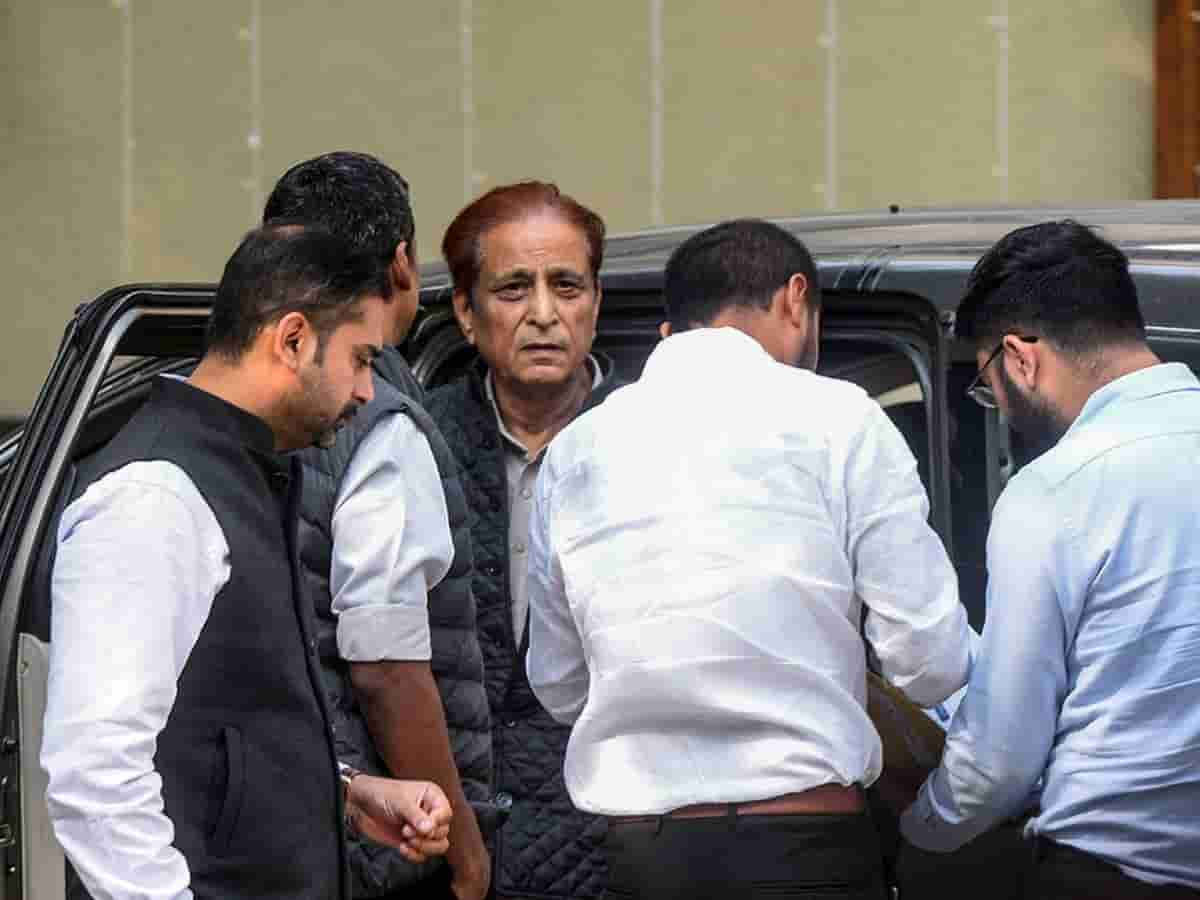
Senior Samajwadi Party leader and former Uttar Pradesh cabinet minister Mohammad Azam Khan received significant back-to-back legal relief on Tuesday, November 17, 2026, in a dramatic day of courtroom developments spanning New Delhi and Prayagraj. First, the Supreme Court of India upheld the suspension of his conviction in the long-running fake birth certificate case while extending the same relief to his wife, Tazeen Fatma, and son, Abdullah Azam Khan. Hours later, a division bench of the Allahabad High Court granted interim bail to the 78-year-old veteran politician in a money laundering case filed by the Enforcement Directorate (ED), sharply criticizing the central agency’s October 31 arrest outside Rampur District Jail as “motivated and malafide”. For Khan, who has spent years battling dozens of criminal and financial prosecutions in Uttar Pradesh, Tuesday’s twin judicial orders offer major procedural breathing room and mark a critical turning point in his protracted legal battles.
Supreme Court Upholds Stay on Conviction in Birth Certificate Case
The day’s favorable turn for the Rampur strongman began in the Supreme Court, where a bench comprising Justices Dipankar Datta and Sheel Nagu dismissed an appeal filed by the Uttar Pradesh government seeking to restore Azam Khan’s conviction in the forged birth certificate matter. The case dates back to a first information report lodged by Bharatiya Janata Party MLA Akash Saxena, who alleged that Abdullah Azam Khan possessed two birth certificates reflecting different dates of birth—January 1, 1993, and September 30, 1990. While a trial court had earlier convicted Khan, his wife Tazeen Fatma, and son Abdullah, the Allahabad High Court in May 2024 suspended their sentences and stayed Azam Khan’s conviction, though it had initially declined to stay the convictions of Fatma and Abdullah. Ruling on cross-appeals from both the state government and the family on Tuesday, the Supreme Court not only refused to overturn the relief granted to Azam Khan but also extended the stay on conviction to his wife and son, granting them bail subject to trial court conditions.
Allahabad High Court Calls ED’s Jail-Gate Arrest ‘Motivated and Malafide’
Shortly after the Supreme Court ruling, attention shifted to Prayagraj, where a division bench of Justices Rajiv Gupta and Devendra Singh-I at the Allahabad High Court heard Azam Khan’s writ petition challenging his recent arrest by the Enforcement Directorate. Represented by senior advocates Kapil Sibal, N.I. Jafri, and Imran Ullah, Khan argued that the central probe agency acted with malice and bypassed mandatory procedural safeguards. Specifically, Khan and his son had been granted bail by the High Court in a dual PAN card case on October 29, 2026. Yet the moment Khan stepped out of Rampur District Jail on October 31 after completing bail formalities, ED officials arrested him right at the prison gate in connection with a Prevention of Money Laundering Act (PMLA) investigation. A special PMLA court in Ghaziabad subsequently remanded him to 14-day judicial custody at Dasna District Jail on November 1. After Khan initially approached the Supreme Court, the apex court on November 5 transferred his plea to the Allahabad High Court with instructions to hear it on priority. Accepting the defense’s submissions at the interim stage, the High Court bench termed the ED proceedings “motivated and malafide” and ordered Khan’s release on interim bail.
Inside the Jauhar University Money Laundering Allegations
The ED’s money laundering case centers on alleged financial irregularities and land acquisition disputes linked to the Mohammad Ali Jauhar University in Rampur, an educational institution founded and championed by Azam Khan. The central agency’s Enforcement Case Information Report (ECIR) stems from roughly 26 predicate FIRs registered by the Uttar Pradesh Police in 2019, which accused Khan and his associates of forcibly occupying agricultural land belonging to local farmers for the university campus. Prosecutors led by Additional Solicitor General S.V. Raju and Senior Advocate Zoheb Hossain alleged that public funds and construction materials meant for government works were diverted toward the university, and that money from state contractors was routed back into the Mohammad Ali Jauhar Trust in the form of donations. During Tuesday’s hearing, Khan’s legal team countered that the agency had attached university land and buildings valued at approximately ₹500 crore despite the fact that the district administration had already restored disputed parcels to farmers, some of which were later sold to third parties.
What Happens Next in Court and Uttar Pradesh Politics
While Tuesday’s orders deliver undeniable momentum for Azam Khan and his family, the legal battle over the PMLA investigation is far from over. The Allahabad High Court granted the Enforcement Directorate seven days to file a detailed counter-affidavit addressing the merits of the case, while allowing Khan ten days thereafter to submit his rejoinder. The division bench has listed the writ petition for its next comprehensive hearing on December 10, 2026. Politically, the back-to-back court victories resonate strongly across western Uttar Pradesh—particularly in Rampur, Moradabad, and Sambhal—as the Samajwadi Party gears up for the 2027 Uttar Pradesh Assembly elections. For Samajwadi Party workers who have long accused state and central agencies of targeting Khan through successive cases, his impending release from Dasna jail on interim bail provides an immediate morale boost, even as his legal team prepares for the crucial December 10 High Court showdown.