 North India Statesman
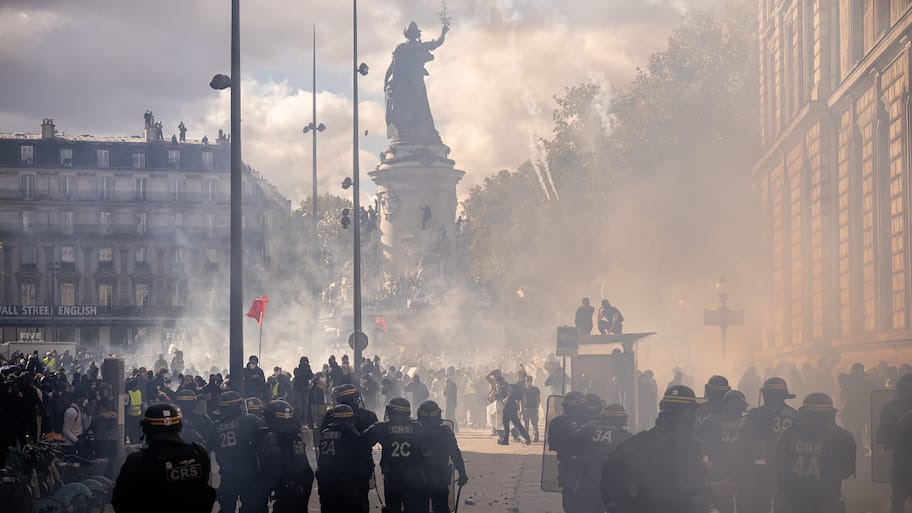
French Prime Minister Sébastien Lecornu has announced that the government will enforce fresh, targeted curfews across regions where local conditions demand immediate intervention, following consecutive nights of violent unrest, widespread arson, and commercial looting across several French metropolises. The administration’s tough posture arrives in the wake of escalating nationwide demonstrations initially organized against skyrocketing living costs, high inflation, and strained public welfare infrastructure. Taking to official communication platforms, the prime minister emphasized that decentralized, ground-level evaluations spearheaded by department prefects and municipal mayors will dictate the exact scope and timing of nightly restrictions to prevent violent factions from holding public order hostage.
Targeted Night Curfews Deemed Critical to Restoring Law and Order
Addressing the civil crisis, Prime Minister Lecornu noted that the initial roll-out of nighttime curfews in select urban centers had already demonstrated tangible outcomes by cooling down nighttime tensions. “Targeted curfews have contributed to calm overnight,” Lecornu stated, confirming that regional authorities have been granted sweeping operational latitude to designate fresh restriction zones wherever volatility persists. Rather than imposing a single blanket decree from Paris, the central executive has opted for localized curfews tailored to intelligence assessments from ground zero. Prefects across sensitive departments have been authorized to restrict night movements, ban spontaneous public assemblies, and cordon off vulnerable commercial promenades to break the cycle of nighttime confrontations with law enforcement agencies.
Violent Riots, Torched Landmarks, and Over 2,000 Arrests Across Urban Centers
The push for localized lockdowns follows extraordinary scenes of urban turmoil over the weekend, during which peaceful labor and economic rallies were hijacked by radical fringe groups and organized bands of rioters. In Lyon, demonstrators set fire to a prominent municipal tourist office in the heart of the city, prompting regional authorities to issue an immediate ban on public gatherings and enforce night curfews across central districts. In Paris, protesters disrupted traffic corridors and briefly blocked tourist access to iconic cultural institutions, including the Louvre Museum. Interior Minister Laurent Nuñez revealed that security forces had detained more than 2,000 individuals nationwide within a 48-hour span as security personnel battled localized riots, deliberate street blazes, and coordinated burglaries targeting retail outlets stripped bare by looters.
Unaccompanied Minors Under Scrutiny as Cities Enforce Youth Night Bans
A defining element of the fresh administrative clampdown is the targeted restriction placed on juvenile movement during twilight hours. Multiple municipalities, including Nice along the French Riviera, instituted strict curfews applicable specifically to unaccompanied minors from 9:00 PM to 6:00 AM. Similar nighttime confinement orders for youth were enforced across northern hubs including Lille, Douai, Wattignies, and Denain between 8:00 PM and 6:00 AM. Law enforcement dossiers highlighted that an alarming proportion of those engaging in vandalism, setting municipal trash bins ablaze, and raiding storefronts comprised adolescents operating in decentralized packs coordinated via encrypted messaging channels, forcing regional authorities to hold guardians accountable through strict curfews.
Underlying Economic Anguish: Inflation and Living Costs Fueling Resentment
While the government continues to treat the street violence with an uncompromising security apparatus, the unrest is rooted in deep economic friction across France. Rising consumer energy bills, persistent food inflation, and fiscal adjustments that have tightened domestic purchasing power have led to mounting disaffection among working-class families and low-income suburbs. Labor unions and civic advocacy platforms have warned that while localized curfews may mechanically clear the streets at night, restoring enduring civic peace will require the Élysée and Matignon to present credible financial remedies that ease the everyday squeeze on household budgets.
Heightened Security Deployment and the Threat of Emergency Declarations
As prefectures across France finalize the geographical boundaries for the newest wave of curfews, the interior ministry has placed elite rapid-action police units, including the CRS and specialized anti-crime brigades, on high alert across urban transit hubs, suburban train junctions, and central squares. Government spokespersons have maintained that while the administration remains committed to preserving constitutional rights to peaceful assembly, violence against public servants and destruction of private property will encounter zero tolerance. With Lecornu signaling that the state is prepared to escalate operational mechanisms further if local curfews fail to stem street violence, the coming nights will serve as a decisive test of the government’s ability to re-establish stability without declaring a nationwide state of emergency.


