North India Statesman
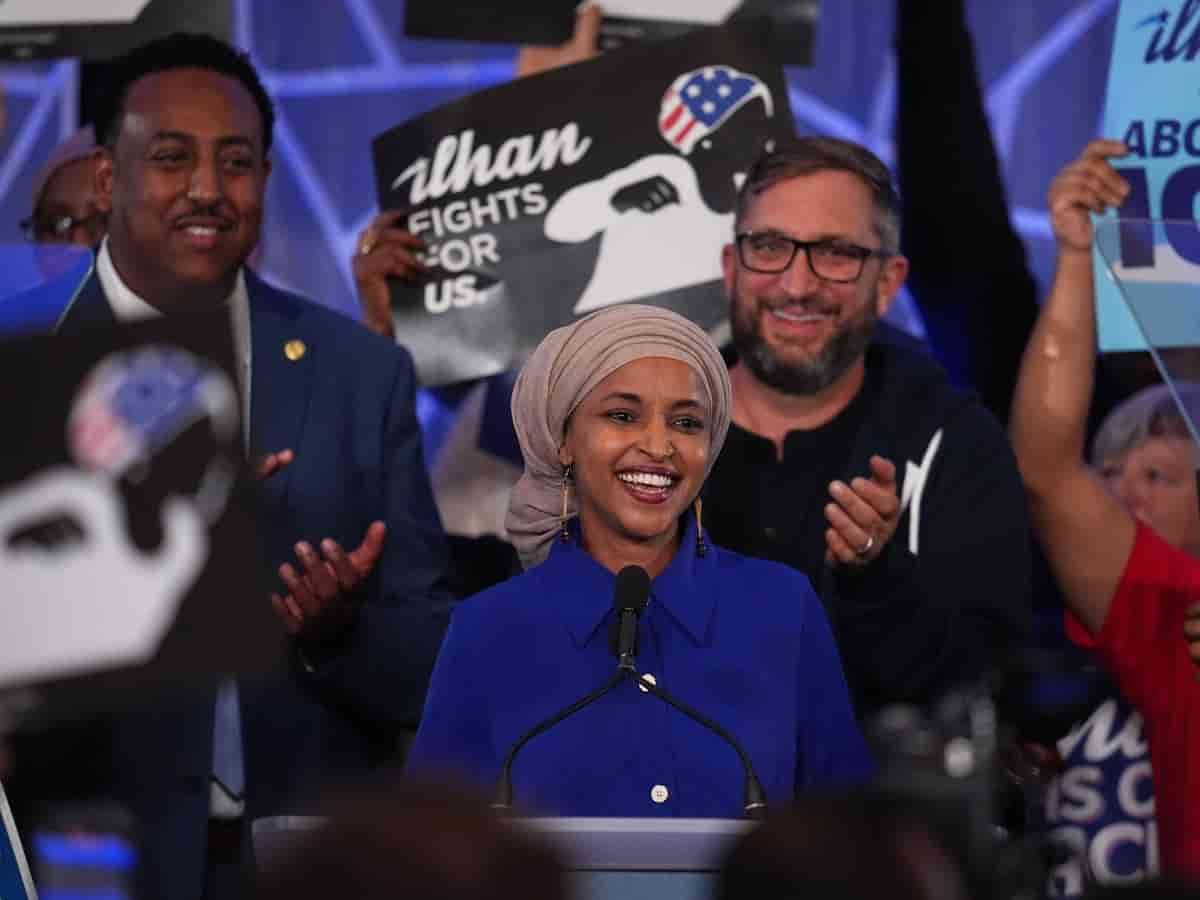
Controversial Democratic lawmaker Ilhan Omar has secured re-election to the United States House of Representatives from Minnesota’s 5th Congressional District, capturing another term in Congress. Known as a prominent member of Capitol Hill’s progressive “Squad,” Omar’s political career continues to generate intense international scrutiny, particularly in New Delhi. Her aggressive public stance on Indian foreign policy, domestic governance, and her documented engagements with Pakistan’s political establishment have made her one of the most vocal anti-India voices in the US legislature.
Resounding Electoral Victory in Minnesota Amid Heavy Scrutiny
Despite mounting political pushback and sharp criticism over her polarizing foreign policy interventions, Omar retained her stronghold in Minneapolis, easily defeating her general election challenger.
Her district, characterized by a heavily progressive Democratic base and a significant diaspora demographic, turned out in large numbers to defend her tenure.
The victory ensures that Omar will retain her platform on Capitol Hill, where she has consistently utilized legislative hearings, resolutions, and social media to challenge mainstream US foreign policy alignments, notably Washington’s strengthening strategic partnership with India.
Consistent Pattern of Anti-India Rhetoric on Capitol Hill
Over the course of her congressional tenure, Omar has repeatedly faced criticism for targeting India on international platforms:
-
Legislative Resolutions: She has sponsored and promoted resolutions in the US Congress attempting to label India a “country of particular concern,” seeking official condemnations regarding minority rights and religious freedom.
-
Boycotting State Events: Omar famously staged high-profile boycotts of landmark diplomatic events, including refusing to attend Indian Prime Minister Narendra Modi’s joint address to the US Congress in Washington, drawing condemnation from both Indian-American advocacy groups and moderate lawmakers.
-
Targeting Bilateral Relations: She has consistently pushed the US State Department to curtail defense cooperation and strategic trade with New Delhi, framing India’s internal governance through an adversarial lens.
The Pakistan Connection and Controversial PoK Visit
The deepest friction between Omar and New Delhi stems from her direct alignment with Pakistan’s geopolitical narrative:
-
Unofficial Visit to Pakistan-Occupied Kashmir (PoK): Omar sparked severe diplomatic outrage when she traveled to Pakistan and made an official-style visit to Pakistan-Occupied Kashmir (PoK).
-
India’s Sharp Rebuttal: The Ministry of External Affairs (MEA) strongly condemned the excursion, stating that her visit to an illegally occupied region violated India’s territorial integrity and reflected her “narrow-minded politics”.
-
Engagements with Pakistani Leadership: During her trip, Omar held high-profile meetings with top Pakistani dignitaries, including former Prime Minister Imran Khan, as well as military and government officials. Her talking points during the trip mirrored Islamabad’s official stance on Jammu and Kashmir, prompting accusations from geopolitical observers that her foreign policy positions were actively coordinating with Pakistani lobbying interests.
-
Selective Outrage: Critics and diaspora organizations have highlighted Omar’s stark double standard, noting that while she frequently levels scathing critiques against democratic India, she remains conspicuously silent on Pakistan’s systemic state-sponsored human rights abuses and state crackdowns on minorities like Balochs, Pashtuns, Hindus, and Christians.
Strategic Implications for India-US Bilateral Ties
With Omar returning to Capitol Hill, foreign policy analysts expect her and allied progressive factions to continue introducing procedural hurdles and hostile amendments targeting India.
However, defense and diplomatic strategists point out that the core architecture of the India-US partnership remains solidly bipartisan. Initiatives spanning the Quad, critical and emerging technologies (iCET), advanced semiconductor manufacturing, and defense co-production enjoy overwhelming support from mainstream Democrats and Republicans alike.
While Omar’s rhetoric generates amplified headlines and fuels anti-India lobbying networks, it remains largely quarantined from altering Washington’s fundamental geopolitical commitment to New Delhi.