North India Statesman
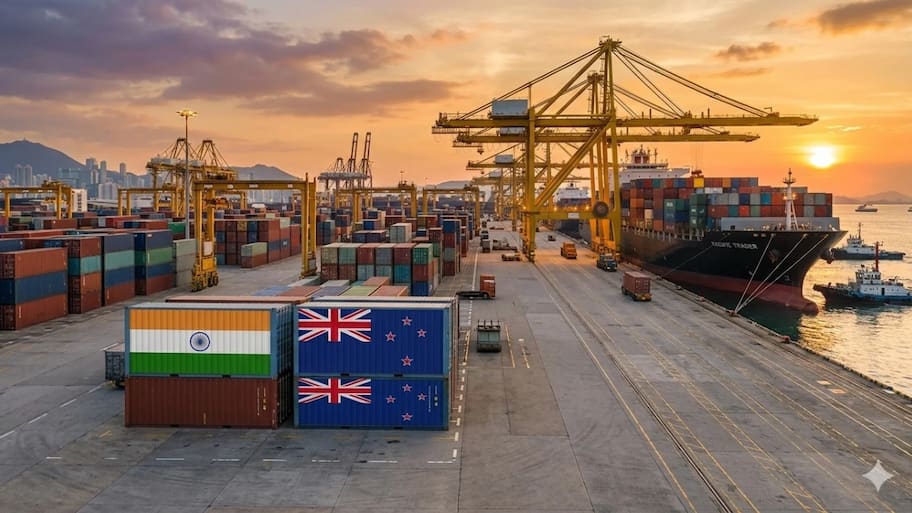
The proposed Free Trade Agreement (FTA) between India and New Zealand is primed to create substantial export opportunities for domestic manufacturers, with bilateral engineering shipments projected to nearly double over the next five years. Highlighting the strategic potential of the trade pact, Pankaj Chadha, Chairman of the Engineering Export Promotion Council (EEPC) of India, noted that preferential market access will give Indian engineering goods a competitive edge in Oceania. While New Zealand currently represents a relatively compact market for Indian exporters, tariff rationalization, simplified customs clearance, and standard harmonization under the FTA are expected to accelerate trade momentum significantly.
Consistent Upward Trajectory Positions Bilateral Trade for a Breakout
India’s engineering shipments to New Zealand have registered steady growth despite broader global trade headwinds. Official export data indicates that outbound engineering deliveries expanded from $129.8 million in the 2024-25 fiscal year to $140.5 million in 2025-26. With the structural catalysts provided by the trade pact, EEPC India projects export volumes to reach between $280 million and $300 million within the next five years. The tariff relief is anticipated to help Indian manufacturers tap directly into high-value procurement chains across New Zealand’s industrial, municipal, and commercial sectors.
Key Industrial Segments Poised to Lead the Oceanic Expansion
The basket of engineering products heading from Indian ports to New Zealand features diverse high-value categories. Prime demand drivers include commercial and passenger automobiles, specialized industrial machinery tailored for New Zealand’s dairy sector, high-precision medical and scientific instruments, office equipment, and primary iron and steel fabrications. The zero-duty and reduced-tariff schedules negotiated in the agreement will allow Indian producers of specialized machinery and agricultural components to compete directly with East Asian and European suppliers in the Kiwi market.
Golden Gateway for Indian MSMEs and National Export Targets
A defining advantage of the trade pact lies in its accessibility for Micro, Small, and Medium Enterprises (MSMEs). The reduction of non-tariff barriers and standard recognition will enable smaller Indian enterprises to diversify their international portfolios beyond traditional markets in Europe and North America. Furthermore, expanding footprint across New Zealand aligns with India’s long-term roadmap to scale overall engineering exports toward the $250 billion to $300 billion milestone by 2030, reinforcing the nation’s position as a reliable global manufacturing hub.