North India Statesman
Sharadiya Navratri, celebrated from the Pratipada tithi of Ashwin Shukla Paksha, marks the grand nine-day invocation of Goddess Durga across households and temples from Varanasi, Ayodhya, and Lucknow to Delhi and Kolkata. In 2026, the divine festival commences on Sunday, October 11, concluding with Vijayadashami on October 20. According to sacred verses in the Devi Bhagavata Purana—“Shashi Soorye Gajaroodha, Shani Bhaume Turangame, Gurau Shukre Cha Dolayam, Budhe Nauka Prakirtita”—the weekday on which Navratri begins determines the divine vehicle (vahana) of the Goddess. Since this Navratri begins on a Sunday, Maa Durga is making her sacred arrival riding an elephant (Gajarudha). In Vedic tradition, the elephant represents abundant rainfall, fertile harvests, economic flourishing, and cosmic peace, signaling that this year’s festival brings exceptional auspiciousness, financial stability, and relief from long-standing struggles.
Auspicious Muhurat Timings for Kalash Sthapana on October 11, 2026
The most vital ritual on the opening day is Ghatasthapana, the formal consecration of the sacred urn that anchors the divine presence of Adi Shakti in the home. Astrological panchang calculations establish the primary morning Ghatasthapana Muhurat on Sunday, October 11, 2026, from 06:19 AM to 10:12 AM, offering devotees a pristine window of three hours and fifty-three minutes. For households unable to conclude their preparations during the dawn hours, the highly sacred and universally accepted Abhijit Muhurat opens from 11:44 AM to 12:31 PM. Performing Kalash Sthapana within these prescribed periods shields the family altar from malefic planetary influences and invokes the uninterrupted protection of Goddess Shailputri, the first manifested form of Durga.
Comprehensive Samagri List Required for Vedic Ghatasthapana
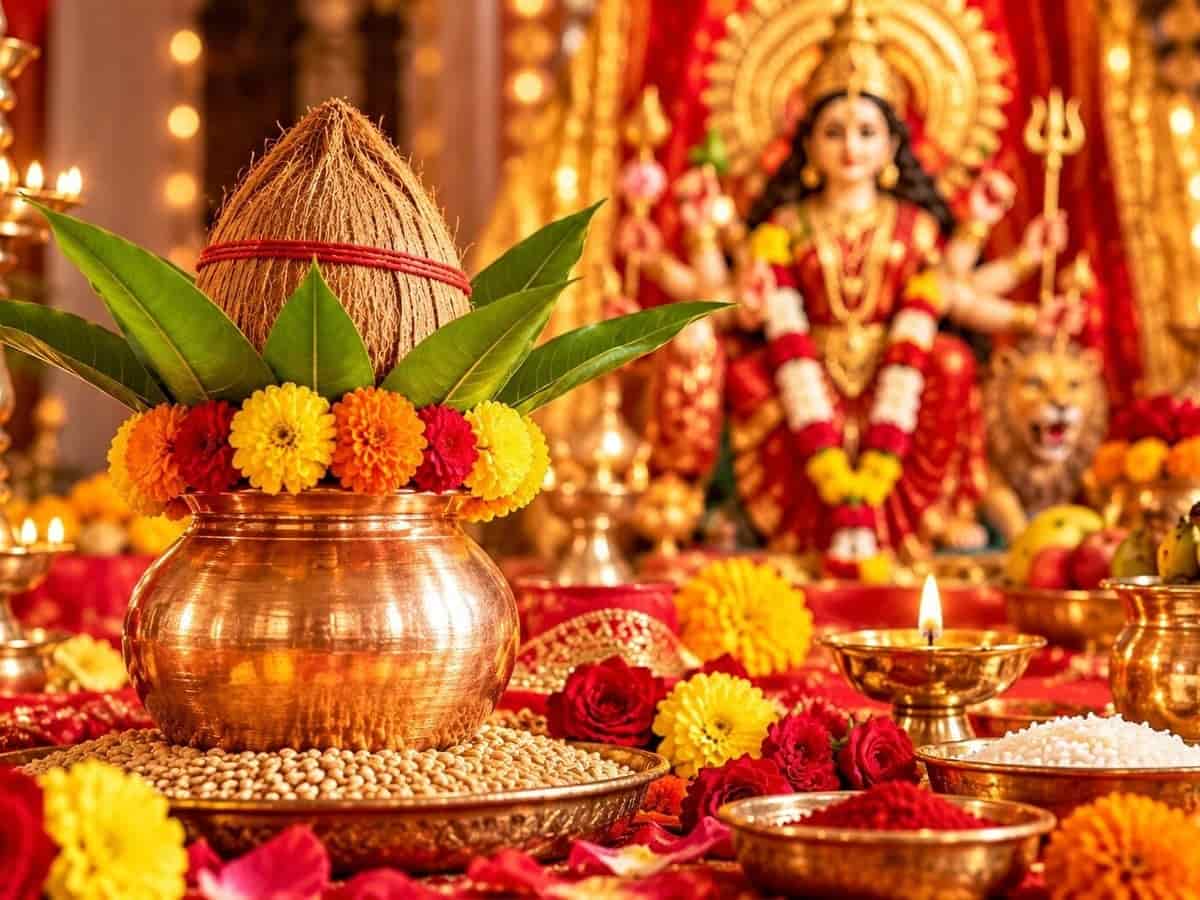
Executing the ceremony without interruptions requires assembling pure, authentic puja ingredients beforehand. The necessary materials include a wide-mouthed earthen tray, fertile soil or clean sand, whole barley seeds (jau), and a clean Kalash forged from copper, brass, or unbaked clay. Arrange fresh water mixed with sacred Ganga Jal, a whole betel nut (supari), a clean metallic coin, an unbroken turmeric knot (haldi gaanth), whole raw rice grains (akshat), fresh durva grass, and vermilion (roli). Furthermore, keep ready five or seven fresh mango or Ashoka leaves, a water-filled whole coconut with its fibrous husk intact, red sacred cloth (chunri), raw sacred thread (moli/kalava), green cardamoms, cloves, cow ghee, an earthen or brass diya, fresh fragrant flowers, betel leaves, and sweet batashas for offering divine bhog.
Authentic Step-by-Step Kalash Installation and Worship Method
The ritual commences at dawn with self-purification through a cleansing bath and wearing clean traditional attire. Thoroughly cleanse the home temple located in the North-East or East sector of the house, purifying the vicinity with sprinkled Ganga Jal. Position a wooden platform (chowki), drape it with an unused red cloth, and seat an idol or portrait of Maa Durga upon it before lighting an unbroken cow-ghee lamp. Take the wide earthen dish, spread clean soil, sow the barley seeds evenly across the surface, cover with a light soil layer, and sprinkle water gently to initiate the sacred nine-day sprouting. Next, take the Kalash, mark a sacred Swastika using wet roli, wrap moli around the neck, and fill it with sanctified water, dropping inside the coin, supari, turmeric root, akshat, clove, and cardamom. Place the mango leaves along the rim, crown it with the coconut wrapped tightly in red chunri, and rest the vessel squarely in the center of the sown barley bed while invoking the Holy Trinity through the Kalash Gayatri mantra. Conclude the morning installation by offering seasonal fruits, performing aarti, and praying for everlasting joy and prosperity.