North India Statesman
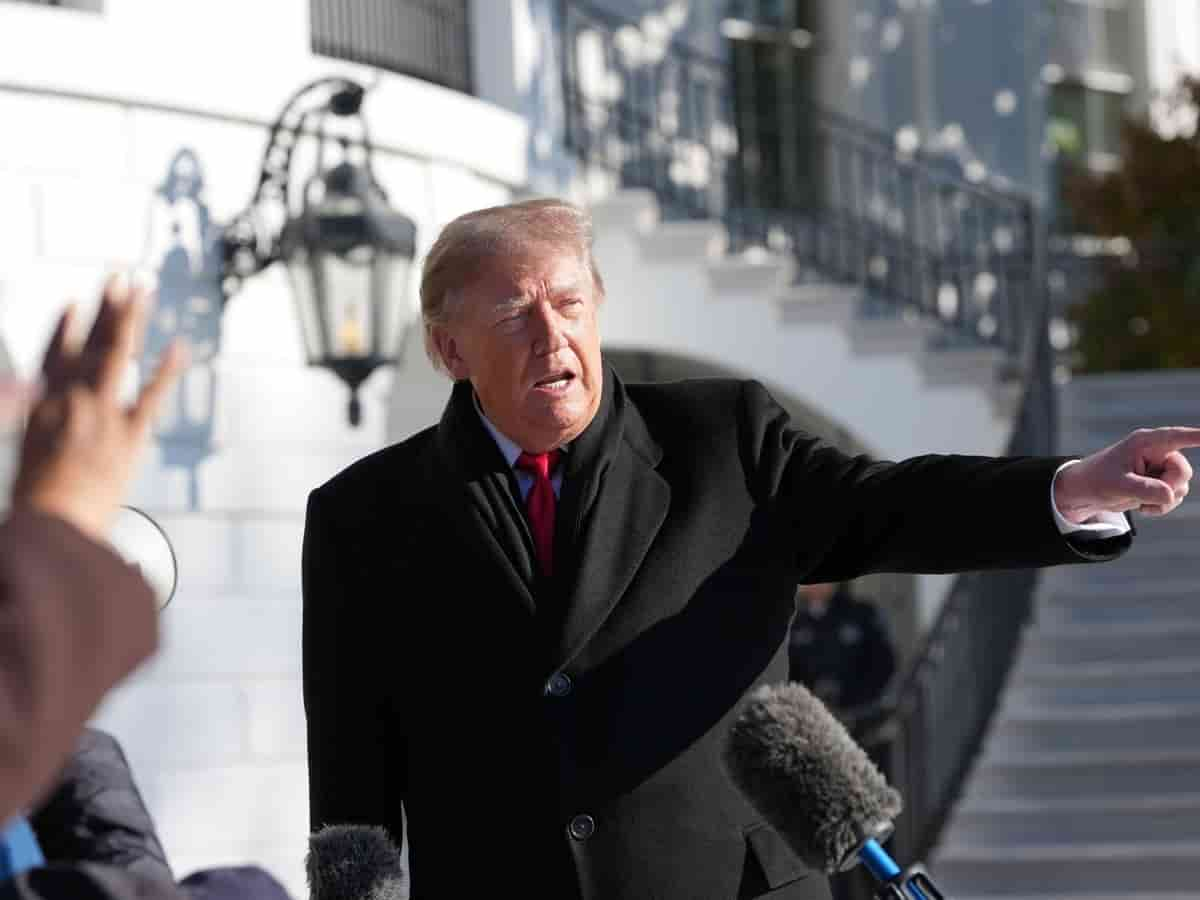
President Donald Trump lashed out at the state of American aviation on Sunday, November 15, 2026, directing sharp criticism at former President Joe Biden after a rare nationwide Federal Aviation Administration (FAA) ground stop paralyzed air travel across the United States. Breaking two days of public silence following Friday’s four-hour flight freeze, Trump took to Truth Social to brand the previous administration’s oversight of the nation’s skies an outright “disaster”. In a furious post, Trump argued that Biden-era leadership squandered taxpayer money while allowing critical aviation infrastructure to deteriorate. “Everything they touched turned bad,” Trump wrote, adding that the previous government had engaged in “big money spent unwisely, making an old and broken system worse than when they began”.
Why did the FAA ground all flights across the United States?
The nationwide ground stop—only the third of its kind in modern American aviation history after the September 11, 2001 attacks and a January 2023 computer outage—was triggered on Friday afternoon, November 13, 2026, by a severe technical overload in the air traffic control network. According to U.S. Transportation Secretary Sean Duffy, the disruption began during routine telecommunications maintenance when defense contractor L3Harris was replacing an outdated section of copper wiring with modern fibre-optic cable. That transition inadvertently triggered a router failure and an overload across the network, causing dangerous instability in aircraft communications and radar feeds. To protect passenger safety, federal regulators ordered all domestic and international departures halted for more than four hours while engineers isolated the fault and stabilized radar tracking.
How severely did the outage impact American airports and travelers?
Although the FAA lifted the formal ground stop later on Friday, the cascading operational fallout stranded hundreds of thousands of passengers across major U.S. aviation hubs from Washington, D.C., and New York to Chicago, Atlanta, Dallas, and Los Angeles International Airport (LAX). Aviation tracking data from FlightAware showed that airlines canceled more than 6,400 U.S. flights and delayed over 8,000 others on Saturday alone as flight crews and aircraft remained out of position. The travel misery spilled deep into Sunday, with carriers forced to scrap more than 2,300 additional flights and delay roughly 7,700 departures nationwide. Families, business travelers, and international flyers spent days sleeping on terminal floors and waiting in customer service lines while major domestic airlines scrambled to reset schedules ahead of the busy November travel period.
What is Trump demanding from Congress to fix air traffic control?
Using the weekend travel meltdown to press lawmakers on Capitol Hill, Trump demanded that Congress immediately approve billions of dollars in fresh funding to overhaul the country’s air traffic control infrastructure in one sweeping push rather than in what he dismissed as “drips and drabs”. Calling the current radar and communications network “50 years old — RIDICULOUS!”, the president promised that swift congressional action would allow his administration to construct the “BEST SYSTEM anywhere in the World”. Transportation Secretary Sean Duffy echoed that urgency across Sunday morning political talk shows, vowing a full investigation into the root cause of Friday’s failure while noting that major telecommunications providers—including AT&T, Verizon, and Lumen—stand ready to deploy a brand-new digital network architecture as soon as lawmakers authorize the funds.
How does the funding record compare between the Trump and Biden administrations?
While Trump placed squarely on Biden the blame for decaying aviation technology, federal spending records reflect a complex, multi-year battle over how to modernize America’s skies. During the first year of his presidency, Joe Biden signed the Bipartisan Infrastructure Law, which allocated $25 billion over five years to the FAA specifically to upgrade airport terminals, rebuild runways and taxiways, renovate aging control towers, and strengthen foundational air traffic control systems. More recently, the Republican-controlled Congress approved $12.5 billion in 2025 as part of a broader tax and spending package to begin replacing legacy FAA radar equipment dating back to the 1960s. However, aviation engineers and Duffy have acknowledged that the $12.5 billion allocation serves merely as an initial down payment, with federal estimates suggesting up to $50 billion may ultimately be required to fully replace every copper line and legacy computer terminal nationwide.
What are passenger rights during an FAA-ordered ground stop?
For frustrated flyers caught in the weekend chaos, the disruption also spotlighted ongoing debates over airline consumer protections in the United States. The Trump administration had previously rolled back several Biden-era rules designed to mandate automatic cash payouts for stranded airline passengers. However, aviation legal experts noted that even under the stricter Biden-era regulations, airlines were only required to compensate travelers when delays or cancellations stemmed from issues within a carrier’s direct control, such as mechanical failures or crew shortages. Because Friday’s crisis originated with an external FAA-mandated safety ground stop rather than airline negligence, passengers were entitled to full refunds if they chose not to travel, but carriers were not legally obligated to cover hotel stays or meal vouchers. As normal flight operations gradually resume across American airports this week, the political showdown in Washington ensures that aviation safety, airline accountability, and federal infrastructure spending will remain front and center for both lawmakers and millions of everyday travelers.