North India Statesman
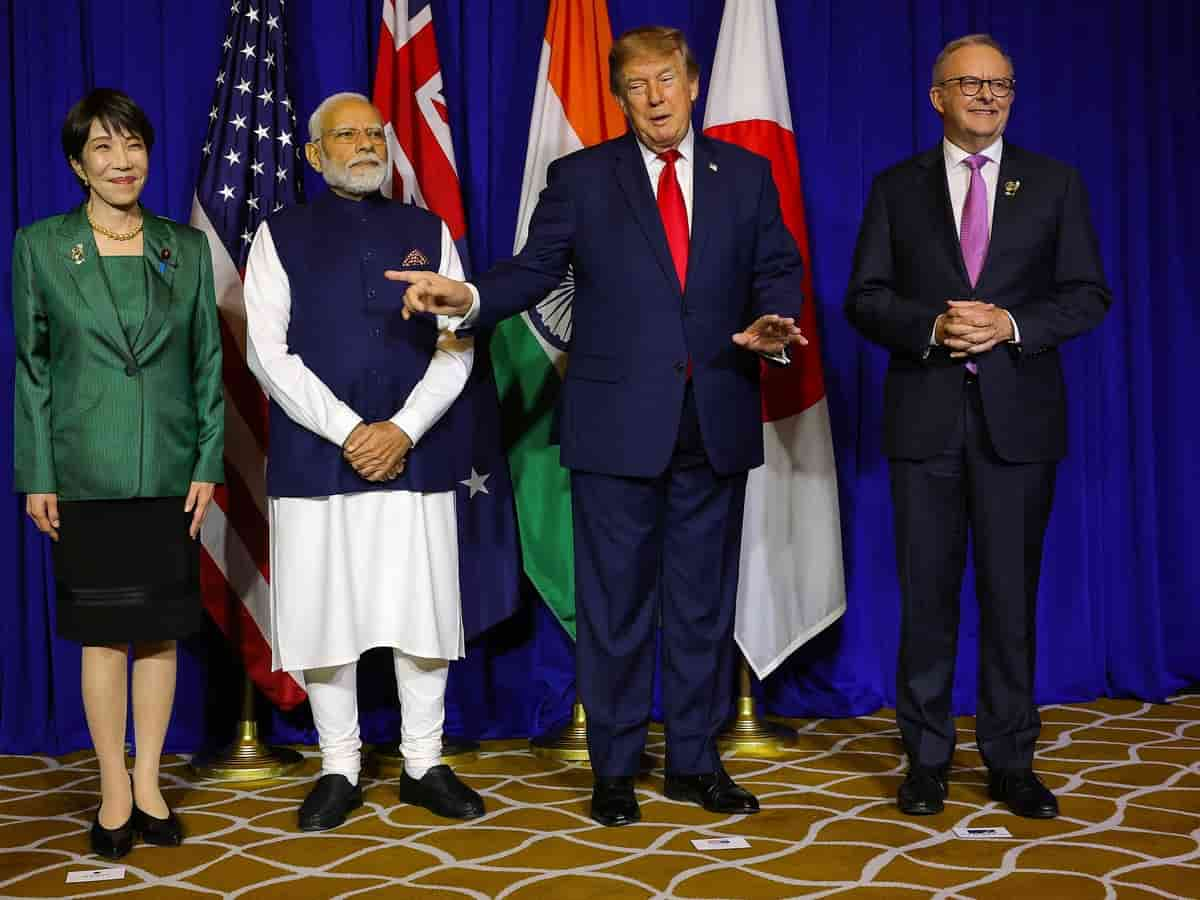
In a candid moment that quickly captured international diplomatic attention, United States President Donald Trump heaped praise on Indian Prime Minister Narendra Modi during the seventh Quad Leaders’ Summit in Manila on Tuesday, November 17, 2026. Standing shoulder-to-shoulder with the Indian Prime Minister ahead of their closed-door roundtable discussions on the sidelines of the annual ASEAN Summit, President Trump pointed directly toward Modi and described him to the gathered press corps as a “very tough man” and a “great leader” who commands global respect. The unscripted remark underscored the personal camaraderie between the two leaders at a pivotal juncture for Indo-Pacific geopolitics. Joined by Japanese Prime Minister Sanae Takaichi and Australian Prime Minister Anthony Albanese, the four leaders gathered in the Philippine capital to chart the next phase of regional cooperation. As cameras clicked during the official photo opportunity, Trump broadened his lighthearted assessment to include the entire table, noting that while Modi is exceptionally tough, Prime Minister Takaichi “may be even tougher,” before adding with a smile that he and Albanese were “okay, too”.
Inside the Unscripted Diplomatic Moment in the Philippines
The exchange took place against the backdrop of high-stakes regional diplomacy hosted by the Philippines under its 2026 ASEAN chairmanship. Addressing journalists briefly before the substantive session began, President Trump emphasized that long-standing personal trust among the four heads of government serves as a vital asset for the Quadrilateral Security Dialogue. He remarked that he has worked alongside the leaders for a considerable period, calling them “phenomenal people” and personal friends, which he said directly helps in navigating complex international negotiations. Prime Minister Modi, dressed in his signature crisp attire, responded with a warm smile and nod as Trump delivered the compliment. For diplomatic observers in New Delhi, Washington, Tokyo, and Canberra, the body language between the Indian and American leaders offered a clear signal of continuity and warmth. This Manila gathering marks the first in-person Quad Leaders’ Summit held during Trump’s second presidential term, following five separate meetings of the grouping’s foreign ministers since January 2025, including a key ministerial conclave hosted in New Delhi earlier in May 2026.
A Recurring Theme in Trump’s Assessment of Narendra Modi
Tuesday’s remarks in Manila were far from an isolated compliment, instead extending a consistent pattern in how Donald Trump characterizes Narendra Modi’s negotiating style and leadership. Just five months earlier, in June 2026, during a bilateral meeting on the sidelines of the G7 Summit in Evian, France, the US President had similarly described Modi as a “very tough negotiator” and a “tough trader”. During that earlier interaction, Trump humorously observed that Modi’s calm, composed demeanor often catches counterparts off guard, remarking that while the Indian leader looks polite and gentle, he is remarkably firm when defending India’s national and economic interests. By echoing that exact sentiment on the Indo-Pacific stage in Manila, Trump reinforced a public narrative of mutual respect between two leaders known for prioritizing domestic strength and strategic autonomy. Political analysts note that such public affirmations carry weight in both Washington and New Delhi, particularly as both nations balance bilateral trade discussions alongside broader strategic alignment across Asia.
Strategic Priorities for India, the US, Japan, and Australia
Beyond the viral soundbites and warm handshakes, the Manila Quad Summit carries substantial strategic weight for the four member democracies. In his opening remarks at the roundtable, Prime Minister Modi framed the Quad as a “constructive and trusted partnership” dedicated to delivering tangible outcomes for the wider Indo-Pacific region. He highlighted four core pillars where the grouping is actively generating reliable solutions: maritime security, resilient supply chains, emerging technologies, and rapid humanitarian disaster response. Earlier in the day, while addressing the 23rd ASEAN-India Summit in Manila, Modi also underscored that the future of the Indo-Pacific must be shaped through cooperation rather than confrontation, calling for global peace, stability, and predictability. The timing of the Quad meeting is especially significant given the broader diplomatic calendar in Asia this week, with President Trump scheduled to travel onward to China following his engagements in the Philippines. For India and its Quad partners, coordinating policy priorities in Manila ensures that regional maritime norms, critical mineral supply networks, and Southeast Asian centrality remain firmly anchored at the forefront of global diplomacy.
What the Manila Summit Means for Future Quad Cooperation
As the seventh leaders’ summit concludes in Manila, diplomatic attention is already shifting toward the next chapter of the four-nation framework. India is slated to host the eighth Quad Leaders’ Summit in 2027, a milestone that will place New Delhi at the center of Indo-Pacific strategic planning. Throughout his two-day visit to the Philippines on November 16 and 17, Prime Minister Modi has paired multilateral summits with targeted bilateral engagements—including talks with Singapore Prime Minister Lawrence Wong and Thai leadership—to align India’s Act East Policy and regional maritime vision with ASEAN’s long-term development goals. Meanwhile, the visible rapport demonstrated between Trump, Modi, Takaichi, and Albanese in Manila reassures regional stakeholders that the Quad remains an active, cohesive mechanism despite shifting global currents. For readers following India’s foreign policy trajectory from New Delhi to the wider Indo-Pacific, Trump’s candid endorsement of Modi’s resolve serves as both a memorable diplomatic moment and a reflection of India’s growing weight at the global high table.