North India Statesman
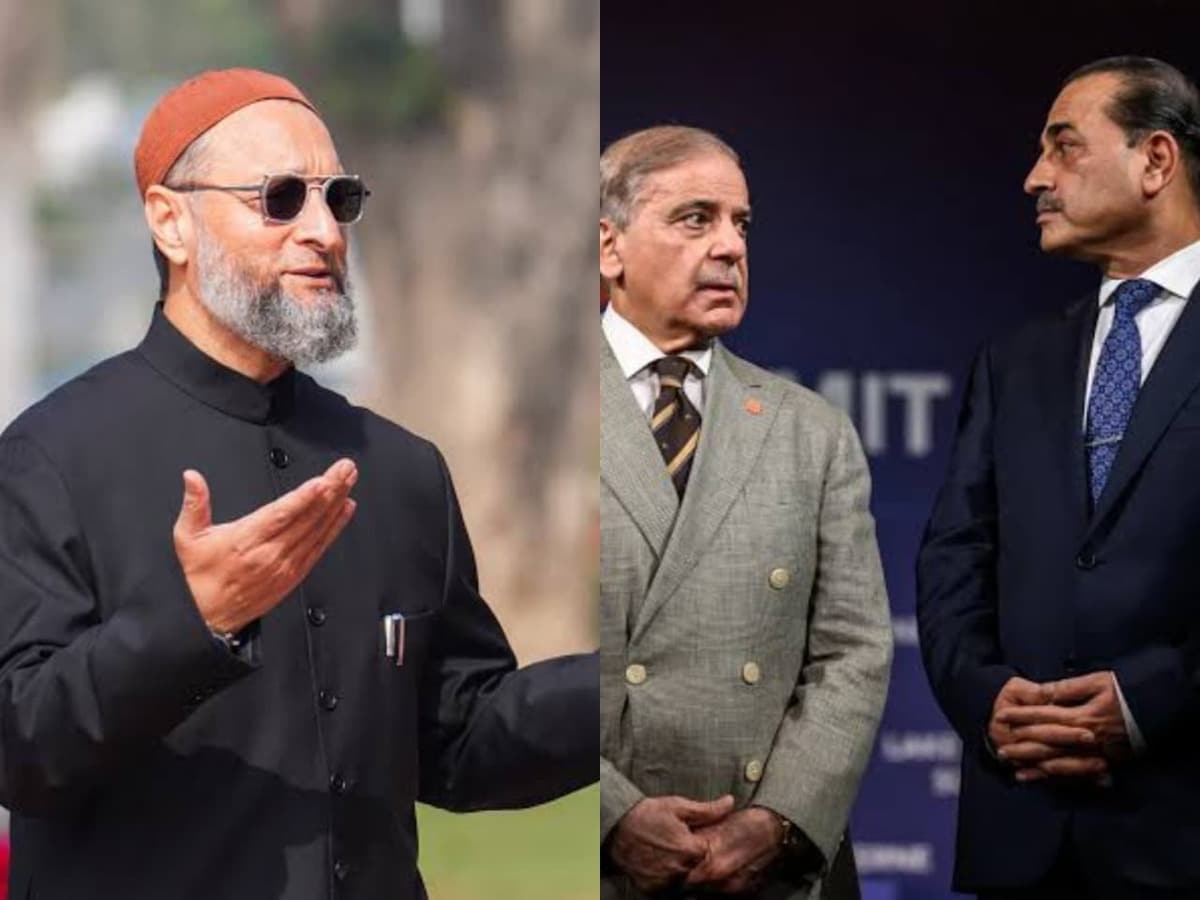
All India Majlis-e-Ittehadul Muslimeen (AIMIM) president and Hyderabad Member of Parliament Asaduddin Owaisi has been named in the 2027 edition of The World’s 500 Most Influential Muslims, an annual international compilation that simultaneously placed Pakistan Prime Minister Shehbaz Sharif and Pakistan Army Chief Field Marshal Asim Munir at the joint number one position. The appearance of Owaisi—one of India’s sharpest parliamentary critics of Islamabad—in the same global directory as Pakistan’s top civilian and military leadership immediately sparked widespread curiosity across Indian newsrooms and social media platforms. The list is published annually by the Royal Islamic Strategic Studies Centre (RISSC), an independent research institute headquartered in Amman, Jordan. Rather than serving as an endorsement of political ideology or state policy, the Jordan-based publication evaluates how political leaders, scholars, business figures, scientists, and cultural icons shape public discourse across Muslim societies worldwide.
Who released the list featuring Asaduddin Owaisi, Asim Munir, and Shehbaz Sharif?
The directory—widely known across diplomatic and academic circles as The Muslim 500—is compiled and released by the Royal Islamic Strategic Studies Centre (RISSC) in Amman, Jordan. First launched in 2009, the 2027 report marks the 18th annual edition of the publication and features 509 individuals drawn from 82 countries, including 29 newcomers. According to the editorial board at RISSC, selections are determined through a combination of public opinion indicators, expert assessments, institutional reach, and long-term impact across 13 distinct categories ranging from politics and religious administration to business, science, philanthropy, media, and sports. The editors explicitly state in every edition that inclusion in the book measures observable influence rather than moral approval, noting that geopolitical, social, or cultural sway can carry complex and contested consequences across regions.
Where is Asaduddin Owaisi placed in The Muslim 500 2027 edition?
To understand how Asaduddin Owaisi appears alongside Asim Munir and Shehbaz Sharif, readers have to look at the two-tier structure of the RISSC publication. Only the top 50 personalities in The Muslim 500 receive an individual numerical rank, whereas the remaining 450 individuals are listed without numerical rankings and organized strictly by professional domain. Asaduddin Owaisi is featured among the 450 unranked influential figures under the Politics category rather than inside the numbered Top 50. Now serving his fifth consecutive term as the Lok Sabha Member of Parliament from Hyderabad in Telangana, Owaisi is recognized in the report for his national footprint as president of AIMIM, his background as a London-trained barrister, and his high-visibility interventions in Indian constitutional and minority-rights debates. From his political stronghold in Hyderabad to electoral campaigns across Maharashtra, Bihar, Uttar Pradesh, and Telangana, his voice remains central to discussions surrounding Indian parliamentary politics and urban civic representation.
Why did Asim Munir and Shehbaz Sharif secure the joint number one rank?
The sharpest shift in the 2027 edition occurred at the very summit of the rankings. For the first time in the 18-year history of The Muslim 500, the Royal Islamic Strategic Studies Centre awarded a joint number one position to five leaders rather than naming a single individual. Sharing the top spot are Saudi Arabia’s King Salman bin Abdulaziz Al Saud, Saudi Crown Prince and Prime Minister Mohammed bin Salman, Turkish President Recep Tayyip Erdoğan, Pakistan Prime Minister Shehbaz Sharif, and Pakistan’s Chief of Defence Forces and Chief of the Army Staff Field Marshal Asim Munir. Both Munir and Sharif had previously been listed among the unranked 450, making their leap to the top one of the most dramatic ascents in the publication’s history. RISSC editors credited the five leaders for forging the Makkah Joint Defence Agreement signed on August 7, 2026, by Saudi Arabia, Pakistan, and Türkiye—a trilateral security pact built around collective defence commitments combining Gulf financial weight, Turkish defence technology, and Pakistani military capacity. The book’s biographical note on Munir also cites Islamabad’s official narrative regarding the May 2025 India–Pakistan military standoff, a framing that diverges sharply from official accounts maintained by New Delhi. Because five leaders occupy the joint first position, the individual numerical sequence in the 2027 table resumes directly at fourth place with Iran’s Supreme Leader Ayatollah Sayyid Mojtaba Khamenei, followed by Jordan’s King Abdullah II at fifth and Qatar’s Emir Sheikh Tamim bin Hamad Al Thani at sixth.
Who is the only Indian ranked inside the Top 50 for 2027?
While Asaduddin Owaisi appears in the broader unranked roster, only one Indian citizen secured a spot inside the individually ranked Top 50 of the 2027 edition. Jamiat Ulema-e-Hind national president Maulana Mahmood Madani is ranked at number 18 globally, slipping two spots from his 16th-place finish in the previous edition. Educated at Darul Uloom Deoband and serving at the helm of the century-old socio-religious organization founded in 1919, Madani is cited by the Jordan-based institute for his leadership on minority welfare, legal advocacy on citizenship and religious freedom, and institutional reforms involving the digitization and financial auditing of Waqf properties across India. Elsewhere in the Top 50, the 2027 rankings reflect major global political transitions, placing Syrian interim president Ahmed Al-Sharaa at 46th and New York City Mayor Zohran Mamdani at 49th.
Which other prominent Indians feature in the 2027 Muslim 500 list?
Beyond Maulana Mahmood Madani and Hyderabad MP Asaduddin Owaisi, a total of 22 personalities from India—home to roughly 224 million Muslims—appear across various categories of the 2027 edition. In business and philanthropy, Bengaluru-based Wipro founder Azim Premji is recognized for his vast charitable endowments, including his foundation’s announcement of a $480 million, 1,000-bed hospital project in Bengaluru. Spiritual and regional leaders featured in the unranked 450 include Mumbai-based Dawoodi Bohra community head Syedna Mufaddal Saifuddin, Kashmir’s Mirwaiz-e-Kashmir Dr. Moulvi Mohammad Umar Farooq—who marks his 13th consecutive appearance in the directory—Assam politician Badruddin Ajmal, and controversial preacher Zakir Naik. Science and academia are represented by Lucknow-born NASA astrophysicist Dr. Hashima Hasan for her contributions to the James Webb Space Telescope. India’s entertainment industry also commands substantial visibility in the 2027 edition, with Mumbai film icons Shah Rukh Khan and Salman Khan entering the directory as first-time additions alongside returning names Aamir Khan, veteran actor Shabana Azmi, and Oscar-winning music composer A. R. Rahman. In the publication’s separate social media influence index, Salman Khan ranks second and Shah Rukh Khan fourth globally among Muslim public figures, underscoring how Indian cultural and political voices continue to command international attention even when placed in the same annual volume as regional geopolitical rivals.