North India Statesman
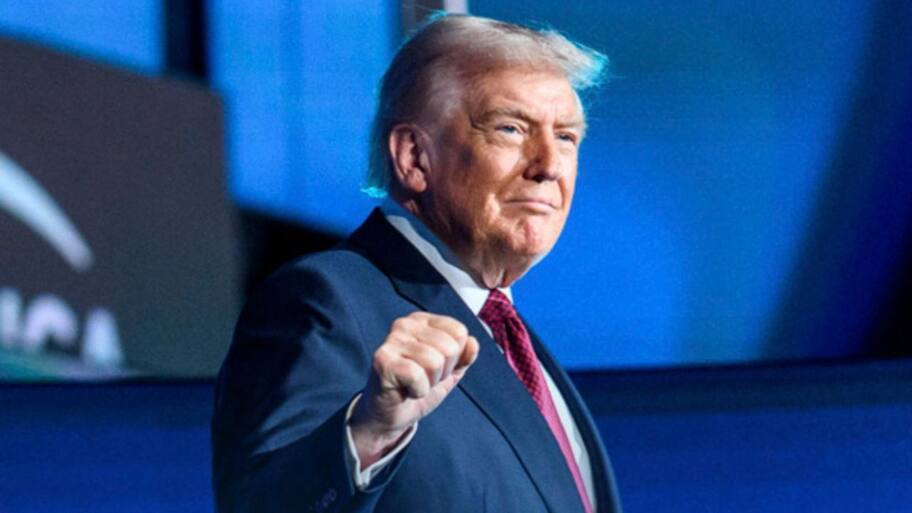
US President Donald Trump has officially extended the controversial executive order mandating a $100,000 entry payment on certain H-1B visa petitions for another twelve months, locking the restriction in place through September 21, 2027. Originally introduced in September 2025, the measure was enacted to curtail what the administration characterized as widespread abuses by large information technology staffing and outsourcing conglomerates. While the administration asserts the curbs protect domestic wages and job security for American STEM graduates, the extension arrives amid ongoing high-stakes legal scrutiny across federal appeals courts.
Who Bears the Cost: IT Outsourcing Firms vs Direct Corporate Hires
The $100,000 payment requirement is not a blanket individual tax on every Indian tech worker, but an employer-sponsored entry obligation targeted primarily at new petitions for professionals stationed outside the United States requiring consular processing. It explicitly excludes foreign citizens already present in the US converting from F-1 student visas, as well as professionals seeking regular extensions or renewals of existing H-1B visas. Consequently, traditional IT staffing and contracting companies—which rely on flying junior and mid-level software engineers from India into client sites—face prohibitive onboarding costs, while top-tier Silicon Valley product giants sponsoring advanced researchers remain far more willing to absorb or legally challenge the financial barrier.
Real Impact on Indian Professionals: Disruption, Not a Dead End
Because professionals born in India consistently account for over 70% of all approved H-1B petitions annually, the extension carries disproportionate significance across Bangalore, Hyderabad, Pune, and NCR tech corridors. However, rather than halting Indian talent outright, the policy is radically transforming immigration pathways and hiring paradigms:
-
Massive Drop in Outsourcing Registrations: Official White House data shows combined H-1B filings from the largest IT staffing and outsourcing agencies plunged from 24,946 to 2,055—a steep 92% contraction.
-
Shift Toward US-Educated Graduates: The policy, paired with DHS wage-weighted lottery systems prioritizing top salary tiers, pushed the share of cap registrants holding at least a US master’s degree from 45.1% to 66.1%. Indian students pursuing advanced degrees in America remain insulated from the immediate entry payment.
-
Expansion of Global Capability Centers (GCCs): US tech multinationals, including Google parent Alphabet, Meta, and Microsoft, are actively scaling engineering hubs, research labs, and AI divisions inside India to retain top engineers without triggering US visa hurdles.
Ongoing Federal Court Battles Cloud Long-Term Legality
The practical enforcement of the $100,000 payment remains wrapped in significant legal uncertainty. In June, a federal judge in Massachusetts struck down the administration’s operational guidance for collecting the fee as unlawful, leading the government to appeal the ruling before the First Circuit Court of Appeals in Boston. Concurrently, corporate lobbying bodies, including the US Chamber of Commerce, are challenging the presidential proclamation on constitutional grounds, arguing that imposing arbitrary statutory fees exceeds executive authority and bypasses the legislative powers of the US Congress.