North India Statesman
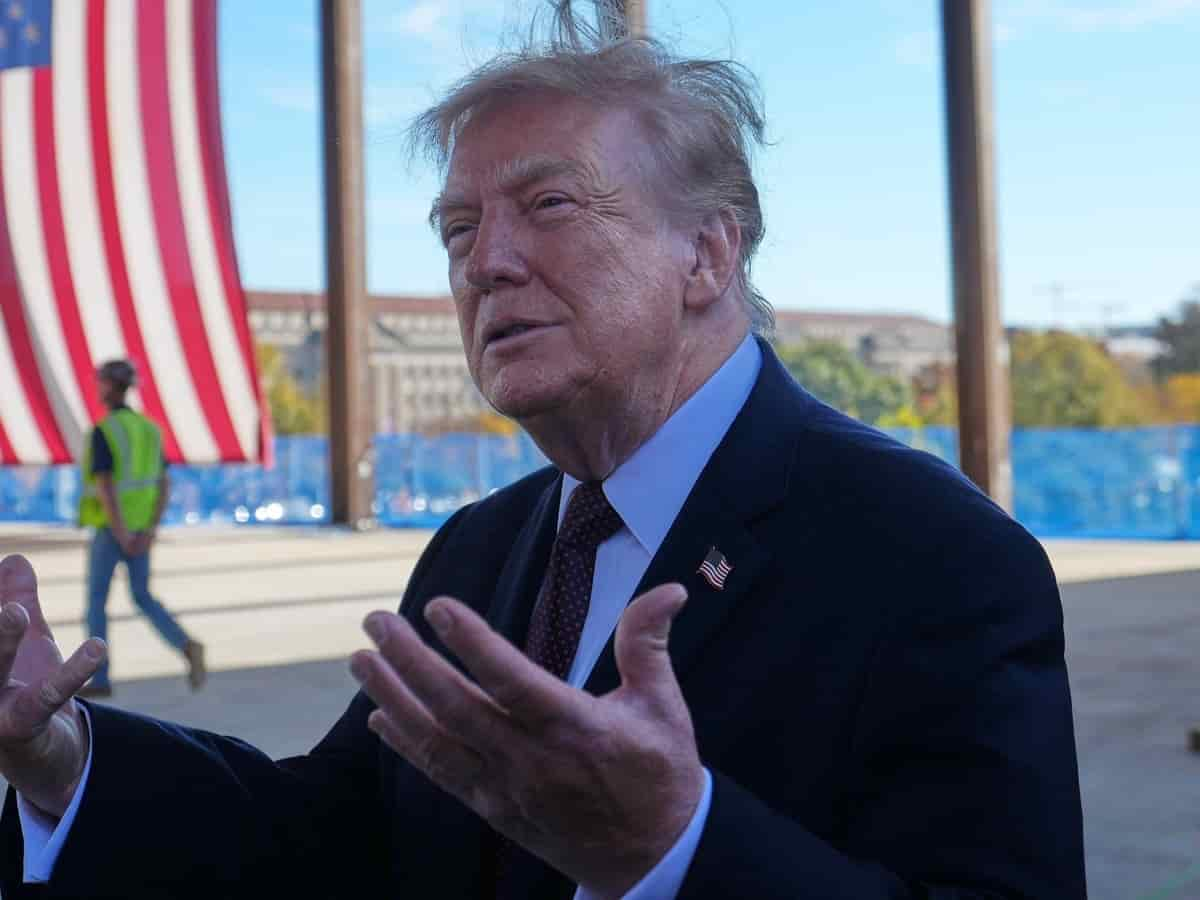
In his first major foreign policy remarks following the Republican Party’s bruising defeat in the US midterm elections, President Donald Trump struck a markedly altered, more measured tone regarding ongoing military hostilities with Iran. Addressing reporters from behind the Resolute Desk in the Oval Office after convening with his national security team, Trump signaled reluctance to intensify the bombardment of Iranian territory, stepping back from the aggressive rhetoric that defined the final stretch of the election campaign.
‘Rather Not Destroy the Rest of the Country’
Speaking candidly about the trajectory of the military confrontation, Trump indicated that a critical decision point is looming, while highlighting the extensive devastation already inflicted on Iran’s infrastructure.
“I would rather not destroy the rest of the country if possible, but maybe I’ll have to. You’ll know soon enough,” Trump remarked to reporters.
Elaborating on the scale of destruction, Trump estimated that it would take over two decades for Tehran to rebuild its damaged national assets, framing the current strategic crossroad around whether Washington should push toward total elimination or pursue de-escalation.
“We’ll make a decision—do we want to go further and just certify it… meaning where it’ll never happen again? I think it’ll take them 25 years to rebuild the country,” he stated.
The comments stand in stark contrast to his pre-poll ultimatums, reflecting a president who has regained public composure and is weighing geopolitical costs against domestic realities.
Electoral Repercussions and Intra-Party Blame
The recalibration follows a brutal midterm cycle in which Democrats swept both chambers of Congress. The protracted confrontation in the Persian Gulf had weighed heavily on the American electorate, keeping domestic gasoline and grocery prices elevated, disrupting commercial transit through the Strait of Hormuz, and depressing presidential approval ratings.
While Trump acknowledged that the conflict had an adverse political fallout, he maintained that curbing Tehran’s nuclear ambitions remained an unavoidable strategic imperative. However, intra-party fractures burst into the open immediately after the ballot counts. Vice President JD Vance publicly attributed the electoral rout directly to the conflict, declaring on social media that “the reason we lost is the war.” Simultaneously, House Republican leadership was thrown into disarray as key allies stepped aside amid mounting pressure from conservative factions.
Downplaying Hostilities Amid Ongoing Backchannel Talks
In an effort to temper market anxieties, Trump downplayed the nature of the confrontation in recent media interviews, rejecting comparisons to historic global conflicts. Speaking to the Financial Times, he argued that the exchange of fire did not constitute a full-scale conflagration comparable to the world wars or the conflict in Ukraine, downplaying recent targeted strikes on air-defense installations as limited tactical maneuvers.
He also confirmed that indirect backchannel discussions remain alive, particularly over securing or diluting Iran’s remaining enriched uranium reserves, which he termed “nuclear dust.”
Tehran, meanwhile, seized on the American election outcome to claim moral and strategic vindication. Iranian Parliament Speaker Mohammad Bagher Ghalibaf declared that American voters had delivered a clear verdict against foreign military entanglements, noting on social media that public fatigue over the war and inflation sent an unmistakable message to Washington.
Global Energy Markets and What Lies Ahead
The tone shift and the prospect of diplomatic containment have offered immediate relief to global financial and energy markets. Brent crude oil benchmarks, which had spiked during weeks of heightened cross-border strikes, tumbled by more than 8% to slide back under the $100 per barrel mark.
With the pre-election pause now expired and congressional control shifting to a Democratic majority preparing oversight inquiries, Trump’s upcoming national security decisions will dictate whether the region moves toward an uneasy diplomatic settlement or renewed kinetic strikes.