North India Statesman
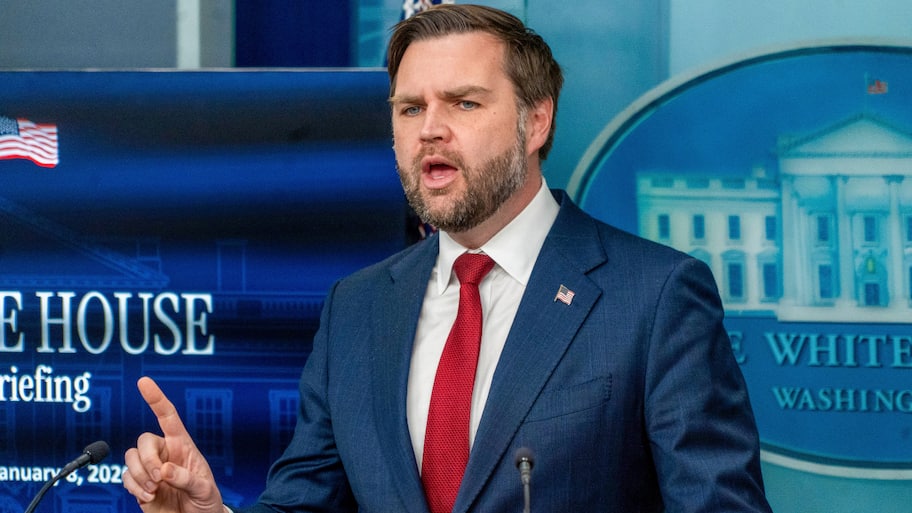
In an escalation of the Trump administration’s employment-based immigration crackdown, United States Vice President JD Vance has forcefully defended the decision to bar eight major technology corporations from the Permanent Labor Certification (PERM) program. Addressing reporters and following up on social media, Vance claimed that enterprise corporations have systematically exploited legal immigration pipelines to drive down labor costs and sideline domestic technical talent. Labeling high-skilled foreign guest workers as “foreign indentured servants,” Vance asserted that the White House will no longer allow multinational corporations to lay off qualified Americans while sponsoring foreign replacements under permanent residency schemes. The rhetoric has ignited sharp international backlash, drawing formal condemnation from India’s Ministry of External Affairs and dividing lawmakers on Capitol Hill.
Scrutiny on Microsoft: Layoffs Paired with Visa Approvals
Directing his sharpest criticism toward American software bellwether Microsoft, Vance cited internal workforce discrepancies to justify the federal intervention. The Vice President stated that over the past year, Microsoft laid off approximately 6,000 American workers while concurrently benefiting from over 6,300 H-1B visa approvals and nearly 3,000 permanent labor certifications. “In other words, if you do the math, for every worker that Microsoft laid off, they replaced that worker with one and a half foreign indentured servants,” Vance asserted. He maintained that while the administration supports technological innovation, corporate growth must rely primarily on American hiring rather than circumventing domestic labor markets through immigrant sponsorship.
Eight Tech and Outsourcing Giants Blocked Under Federal Probes
The suspension, announced alongside US Labor Secretary Keith Sonderling, targets eight of the largest enterprise IT consulting and software providers globally: Microsoft, Adobe, Cognizant, Capgemini, and leading Indian IT exporters Tata Consultancy Services (TCS), Infosys, Wipro, and HCLTech. Sonderling disclosed that the decision stems from active federal investigations led by Department of Labor Inspector General Anthony D’Esposito into alleged visa abuse, improper labor certifications, and wage undercutting. Federal data presented by the department indicated that since 2009, these eight companies alone requested nearly three million foreign workers, securing over 230,000 H-1B approvals and more than 100,000 permanent labor certifications—a volume the administration argues came at the expense of American engineering graduates and displaced tech professionals.
Wage Disparity Claims and Sharp Clashes with Lawmakers
Defending the policy against domestic critics, Vance argued that current guest-worker frameworks create artificial wage suppression. He claimed that foreign professionals brought in on H-1B visas earn roughly $20,000 less than their American counterparts in identical roles, with the gap widening to $48,000 when hired through third-party outsourcing firms. When Democratic Congresswoman Pramila Jayapal—a member of the House Immigration Subcommittee and former H-1B holder—criticized the suspension as an assault on legal immigration that weakens America’s competitive edge, Vance pushed back sharply. Responding on X, Vance wrote that defending current corporate practices amounts to “fighting like hell to ensure mega-corporations have a never-ending flow of cheap labour”.
Diplomatic Backlash and the Unsettled Future of Skilled Migration
While Vance’s remarks were aimed at domestic constituencies, their international fallout was immediate. In New Delhi, the Ministry of External Affairs described the “indentured servants” remark as deeply offensive, noting that it invoked painful colonial history to demean highly qualified professionals who form the backbone of Silicon Valley innovation. For hundreds of thousands of Indian technology workers currently navigating multi-decade green card queues, the rhetoric signals a protracted period of administrative friction. As the Department of Labor halts fresh filings and freezes pending certifications for the targeted eight employers, the battle between corporate talent demand and the White House’s protectionist immigration doctrine is poised to reshape the global technology ecosystem.