North India Statesman
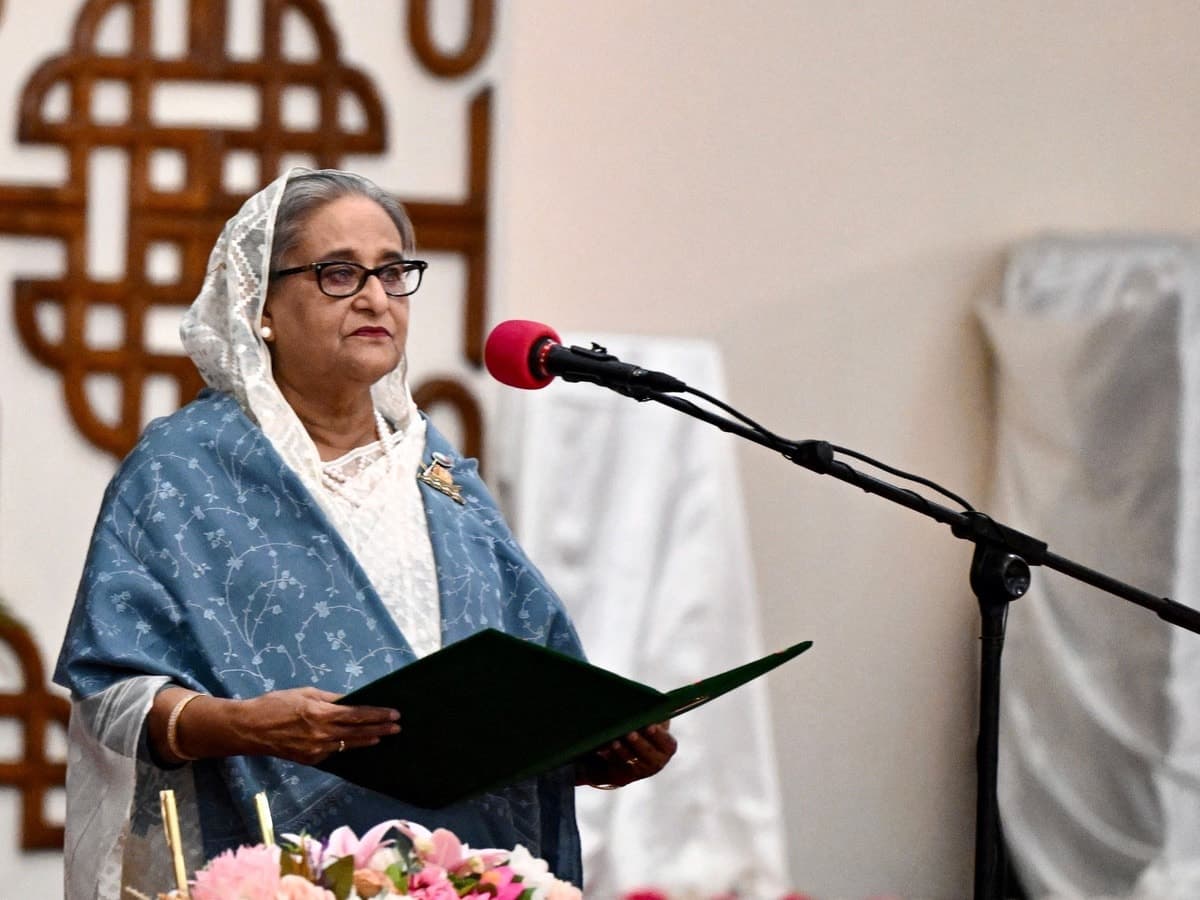
Dhaka has drawn a hard diplomatic line against former Prime Minister Sheikh Hasina’s declared plan to return home from exile in India next month, stating unequivocally that the deposed leader will not be permitted to re-enter the country as an ordinary citizen. In a sharp escalation of rhetoric between the two South Asian neighbours, senior officials in Prime Minister Tarique Rahman’s administration insisted that any handover from New Delhi must strictly follow formal bilateral extradition protocols. Bangladesh’s State Minister for Foreign Affairs, Humaiun Kobir, dismissed Hasina’s proposal to fly back on December 16, declaring during a diplomatic briefing in Dhaka that she can only be brought back in handcuffs or under strict surveillance. The remarks mark a decisive hardening of Dhaka’s posture just weeks ahead of Bangladesh’s Victory Day, turning a symbolic homecoming bid into a high-stakes diplomatic test for New Delhi.
Dhaka Rejects Victory Day Homecoming Request
The diplomatic flare-up follows recent statements from representatives of the 79-year-old Awami League chief, who has lived in self-imposed exile in India since fleeing a mass student-led uprising on August 5, 2024. Through a spokesperson, Hasina announced her intention to return to Dhaka on December 16—the anniversary of Bangladesh’s 1971 liberation from Pakistan—and demanded that authorities arrange a state-operated Biman Bangladesh Airlines flight from New Delhi to facilitate her travel. Her legal team argued that because she was flown out of the country aboard a Bangladeshi military aircraft during the height of the 2024 unrest, the current administration holds a constitutional obligation to bring her back. Dhaka’s leadership, however, swiftly rejected the demand as a calculated political stunt designed to provoke unrest. Addressing foreign envoys and representatives of international organisations in the Bangladeshi capital, Kobir emphasised that a sharp distinction must be drawn between Hasina’s personal wishes and legal reality. State Minister for Foreign Affairs Shama Obaed Islam reinforced that stance at the foreign ministry, noting that no discussions have taken place regarding the dispatch of a special aircraft and warning that Hasina faces immediate arrest the moment she steps onto Bangladeshi soil or enters any of its 84 diplomatic missions worldwide.
Diplomatic Conditions Placed Before New Delhi
While earlier messaging from Dhaka focused largely on submitting formal paperwork to Indian authorities, officials have now shifted toward dictating the exact terms of engagement to New Delhi. Zahed Ur Rahman, an adviser to Prime Minister Tarique Rahman, stated that the modalities of Hasina’s return are not open for negotiation with the former premier herself, asserting instead that the conversation belongs strictly between the governments of Bangladesh and India. According to Dhaka’s latest position, India must treat Hasina not as a political guest, but as a convicted fugitive subject to bilateral handover rules. Officials in Dhaka argue that because Hasina has publicly expressed a willingness to return and face judicial proceedings, no legal barrier remains to prevent New Delhi from executing the existing extradition request. Simultaneously, Bangladesh has refused to reissue Hasina’s passport and national identity documents—which were revoked shortly after her ouster—effectively blocking her from boarding any commercial flight out of New Delhi. When Hasina’s lawyers approached the Bangladesh High Commission in New Delhi earlier in November seeking replacement travel papers on humanitarian grounds, officials flatly refused the request.
Legal Hurdles and the 2013 Extradition Treaty
At the centre of the standoff lies the November 2025 verdict by Bangladesh’s International Crimes Tribunal, which sentenced Hasina to death in absentia for crimes against humanity linked to the lethal state crackdown on protesters in mid-2024. United Nations estimates suggest up to 1,400 people lost their lives during the weeks of turmoil that ended her 15-year uninterrupted rule. Hasina has consistently rejected the tribunal’s legitimacy, maintaining that she intends to surrender before a domestic court to clear her name and rally her banned party’s rank-and-file. Yet legal experts in New Delhi and Dhaka point out that the 2013 India-Bangladesh Extradition Treaty contains specific provisions that complicate an immediate handover. Under the bilateral pact, a requested state retains the discretion to decline extradition if the underlying charges are deemed to be of a political character, or if the individual faces an unjust prosecution. India’s Ministry of External Affairs has maintained a cautious silence on Dhaka’s latest remarks, having previously noted that New Delhi is examining the extradition dossier while seeking constructive engagement with Tarique Rahman’s government, which swept to power in the February 2026 general elections.
Regional Stability and Domestic Fears in Dhaka
Beyond the legal technicalities, political analysts observe that Dhaka’s insistence on a tightly controlled, handcuffed extradition reflects deep anxiety over domestic security and political optics. Allowing Hasina to arrive voluntarily on Victory Day—a date deeply intertwined with the legacy of her late father, independence leader Sheikh Mujibur Rahman—risks creating a dramatic political spectacle capable of energising Awami League loyalists across Bangladesh. Sporadic street blockades, arson, and clashes reported in parts of the country in recent weeks have already heightened concerns within Dhaka’s security establishment. Minister Kobir accused Hasina of orchestrating these disturbances from abroad to intimidate citizens, vowing that law enforcement agencies would respond firmly to any attempts at destabilisation. For New Delhi, the unfolding confrontation requires delicate diplomatic balancing across its eastern border. Hosting Hasina has become an ongoing point of friction in India-Bangladesh relations, affecting bilateral cooperation on trade, border management, and regional connectivity across West Bengal and the Northeast. As December 16 approaches, both capitals face intense scrutiny over whether quiet backchannel diplomacy can contain the dispute or if Hasina’s threatened homecoming will trigger a fresh diplomatic freeze in South Asia.