North India Statesman
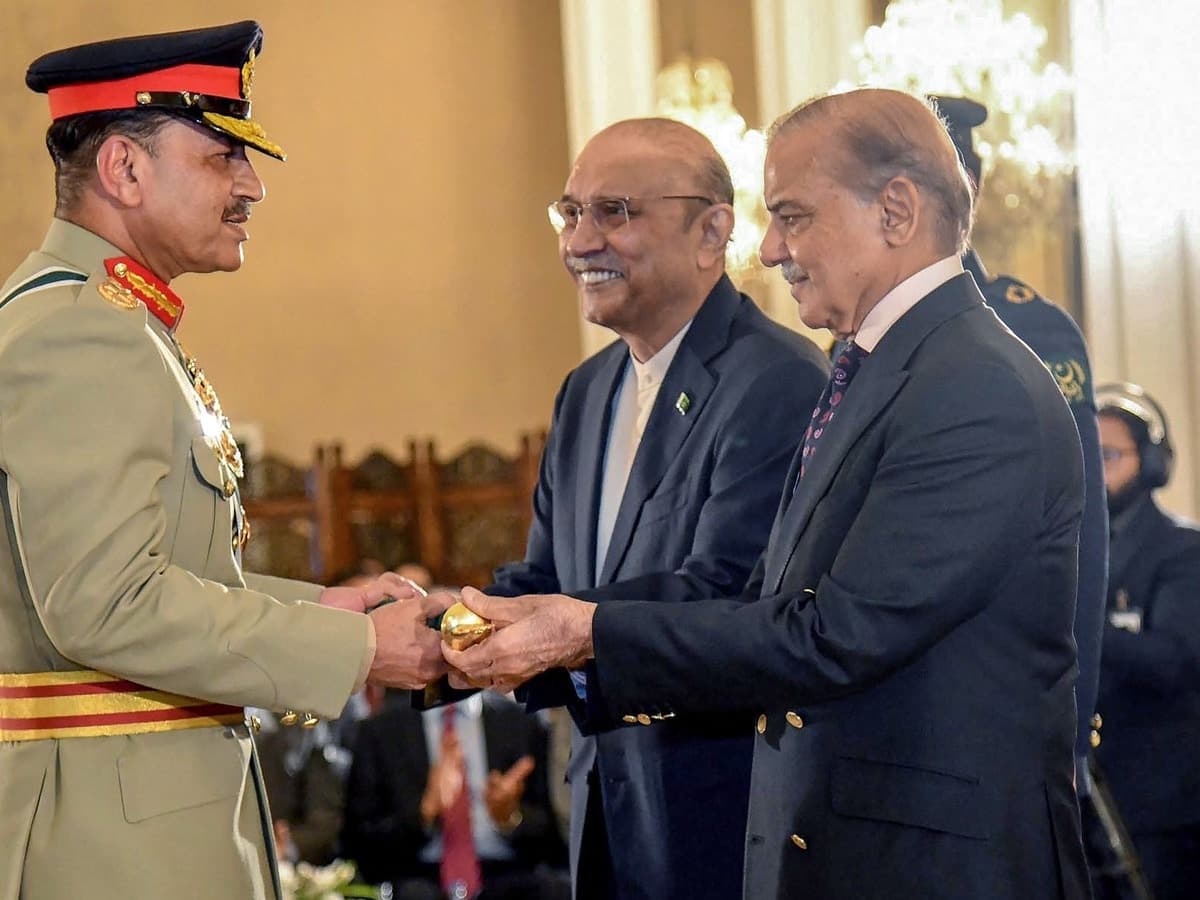
In a striking display of political spin that has raised eyebrows across South Asia, Pakistani Prime Minister Shehbaz Sharif has heaped lavish praise on the country’s military leadership for its handling of last year’s intense confrontation with India. Following the induction of Pakistan’s Army Chief, Field Marshal Syed Asim Munir, into the Hall of Fame at Malaysia’s National Defence Studies Centre (PUSPAHANAS), Sharif took to social media to applaud Munir’s “resolute leadership” during the May 2025 conflict—an episode that independent military observers and analysts in New Delhi largely view as a decisive strategic setback for Islamabad. The congratulatory message has reignited intense debate over how Islamabad frames its military engagements for domestic and international audiences, turning what many saw as a sobering military reality into a celebrated triumph.
Why Did Shehbaz Sharif Praise Asim Munir?
The latest wave of official celebration in Islamabad stems from an accolade awarded to Field Marshal Asim Munir during diplomatic engagements in Kuala Lumpur. Upon Munir’s induction into the Malaysian defence institute’s Hall of Fame, Prime Minister Shehbaz Sharif posted a lengthy message on X (formerly Twitter) extending heartfelt congratulations. In his statement, Sharif specifically credited Munir’s command during what Pakistan officially terms “Marka-e-Haq”, the Pakistani designation for the four-day military escalation with India in May 2025. Sharif stated that Munir’s steadfast commitment to national defence, his promotion of peace, and his efforts to elevate Pakistan’s international standing made him thoroughly deserving of the Malaysian recognition. By tying a foreign academic military honour directly to the May 2025 skirmishes, the Pakistani leadership has attempted to validate its narrative of resilience and strategic victory.
The Reality of Operation Sindoor and the May 2025 Conflict
To understand the contrast between Islamabad’s celebratory rhetoric and the ground reality, defence analysts point back to the events of May 2025. The escalation was triggered by a brutal terrorist attack in Pahalgam, Jammu and Kashmir, where Pakistan-backed militants murdered 26 innocent civilians. In direct retaliation, the Indian Armed Forces launched Operation Sindoor, a series of precision cross-border strikes targeting terrorist infrastructure across Pakistan and Pakistan-occupied Kashmir (PoK). Over the course of the operation, Indian forces dismantled dozens of terror launchpads and eliminated more than 100 operatives. When Pakistan attempted retaliatory strikes against Indian territory, India’s multi-layered air defence network intercepted the incoming threats, while counter-strikes inflicted severe damage on Pakistani airfields, hangars, and radar installations. Satellite imagery and regional intelligence reports from the period indicated that several Pakistani military facilities suffered structural damage that required extensive, long-term reconstruction.
From Ceasefire Appeals to a Field Marshal Promotion
Facing mounting infrastructural losses and an inability to breach Indian air defences, Islamabad rapidly sought an exit ramp from the crisis. Within four days of the initial strikes, diplomatic channels were activated as Pakistan pushed urgently for a cessation of hostilities. A bilateral ceasefire understanding was ultimately reached on May 10, 2025, bringing the immediate exchange of fire to a halt. While New Delhi maintained that the ceasefire was strictly the outcome of direct bilateral military communication, Islamabad’s domestic messaging took an entirely different trajectory. Rather than conducting a public post-mortem of its air defence vulnerabilities, the Pakistani establishment elevated General Asim Munir to the five-star rank of Field Marshal—making him only the second military officer in the nation’s history, after Ayub Khan, to hold the title.
Strategic Messaging and Domestic Politics in Islamabad
Geopolitical experts watching South Asia from New Delhi and Lucknow note that celebrating military setbacks as historic victories is a well-documented pattern in Pakistani civil-military relations. For Prime Minister Shehbaz Sharif’s administration, publicly extolling Field Marshal Munir serves a dual political purpose. Domestically, it projects an image of unshakeable civil-military unity at a time when Pakistan continues to grapple with severe economic headwinds, high inflation, and internal security challenges along its western border. By framing the May 2025 confrontation as a triumph of Pakistani deterrence, the government aims to bolster public morale and insulate the military establishment from domestic criticism regarding the state of its damaged airbases. Furthermore, amplifying international recognitions, such as the Malaysian Hall of Fame induction, allows Islamabad to signal to its domestic constituency that its military leadership commands global respect despite regional isolation.
New Delhi’s Perspective and Regional Implications
In India, strategic observers view Sharif’s latest remarks with a mixture of scepticism and amusement. Indian defence officials have consistently emphasised that Operation Sindoor established a clear new benchmark for deterrence, demonstrating New Delhi’s willingness and capability to strike deep inside hostile territory with pinpoint accuracy. For readers and policy watchers across Uttar Pradesh and the broader Hindi heartland, where national security and cross-border counter-terrorism remain top priorities, Islamabad’s narrative inversion underscores the deep divide in how the two neighbours interpret the same historical facts. While Pakistan’s leadership continues to celebrate Munir’s tenure, Indian strategists maintain that the physical damage inflicted during May 2025 serves as a lasting reminder of the actual military balance in the subcontinent. As bilateral trade and formal dialogue remain frozen, Sharif’s enthusiastic endorsement of Munir’s wartime record suggests that Islamabad remains committed to a curated version of events, prioritising domestic political survival over an objective assessment of regional security realities.