North India Statesman
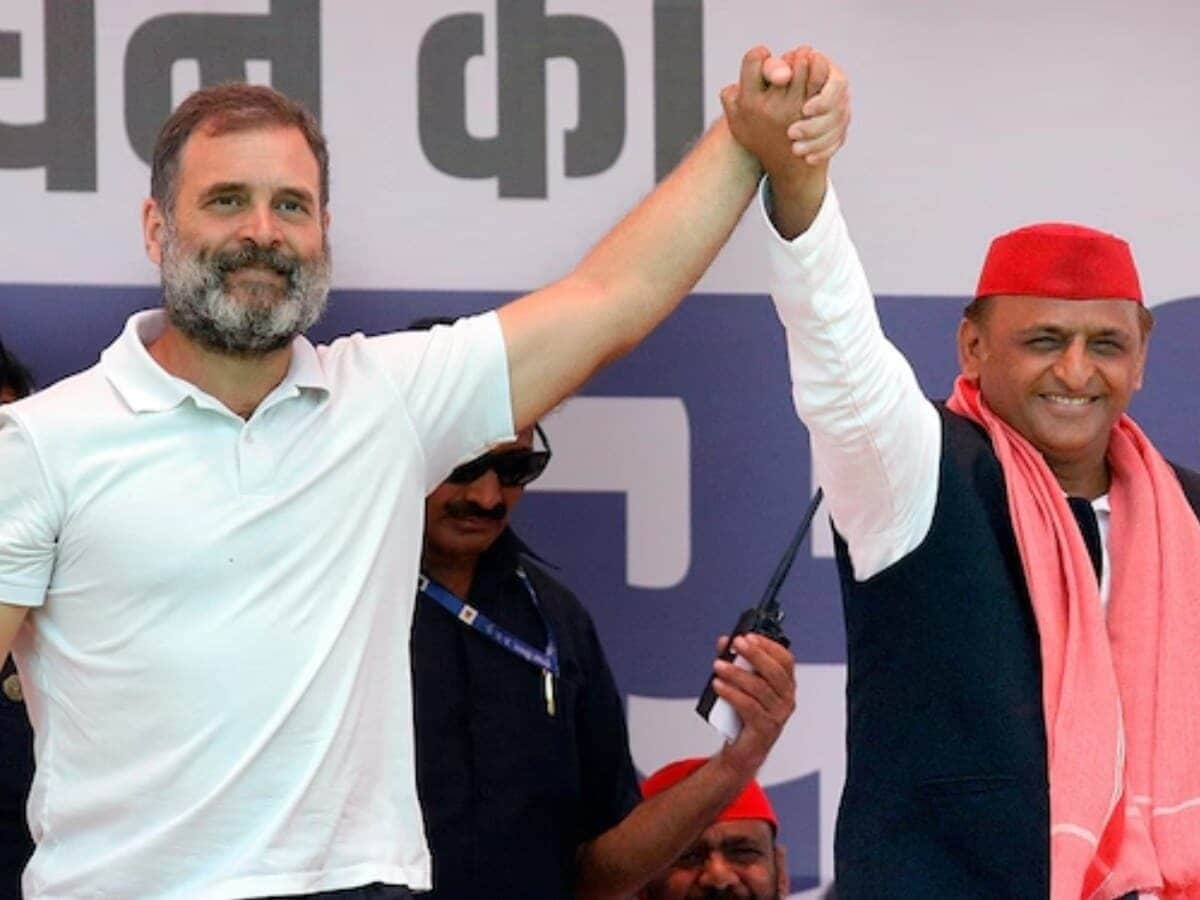
As political activity intensifies across Uttar Pradesh ahead of upcoming electoral battles, caste arithmetic in the Rohilkhand region has moved to the forefront of party strategy. In Moradabad district, famously known as India’s Brass City, political strategists are closely tracking an estimated 2.30 lakh voters from the Saini community spread across all six assembly constituencies. With intense negotiations underway within the INDIA bloc over seat-sharing between the Samajwadi Party (SP) and the Congress, the electoral weight of this influential Other Backward Class (OBC) group has sparked fresh debate over candidate selection and ticket distribution.
Why Are Saini Voters Crucial in Moradabad Politics?
In Moradabad’s six assembly segments—Moradabad Nagar, Moradabad Rural, Thakurdwara, Kanth, Bilari, and Kundarki—the Saini community represents one of the largest and most cohesive non-Yadav OBC voting blocs. While the Election Commission of India does not publish official caste-wise electoral rolls, internal political assessments compiled by major parties estimate the district’s Saini electorate at roughly 2.30 lakh. Because victory margins in several Moradabad constituencies have historically been narrow, even a partial swing among Saini voters can alter outcomes across urban wards and agrarian belts alike.
Constituency-Wise Breakdown of Saini Electorate
Political analysts tracking booth-level trends point out that Saini voters hold measurable sway in every single assembly segment of Moradabad district. According to local political estimates, the highest concentration is in the urban Moradabad Nagar constituency, which accounts for nearly 55,000 Saini voters. In the 2022 Uttar Pradesh Assembly elections, Bharatiya Janata Party (BJP) MLA Ritesh Gupta retained Moradabad Nagar by a razor-thin margin of under 800 votes, underscoring how critical every community cluster is in the city seat.
In the rural and semi-urban constituencies of Thakurdwara, Bilari, and Kanth, Saini voters number approximately 40,000 in each seat. Thakurdwara, which currently has 3,55,120 registered voters according to the 2026–27 electoral rolls, is represented by Samajwadi Party MLA Nawab Jan. Similarly, SP legislators Faheem Irfan and Kamal Akhtar hold Bilari and Kanth respectively, where Saini cultivators and small business owners frequently act as the balancing force between traditional party bases.
Meanwhile, Moradabad Rural (Dehat)—with a total electorate of roughly 3,19,480 and represented by SP MLA Haji Nasir Qureshi—is estimated to have around 30,000 Saini voters. In Kundarki, where BJP MLA Ramveer Singh scripted a major turnaround in the 2024 assembly by-election, approximately 25,000 Saini voters form a vital component of the constituency’s social coalition.
Seat-Sharing Tussle Heat Ups Amid Alliance Talks
Behind closed doors, continuous rounds of meetings between Samajwadi Party and Congress leaders over seat-sharing formulas have heightened local lobbying in Moradabad. During the 2022 state elections, the Samajwadi Party dominated the district by winning five of the six seats, leaving only Moradabad Nagar to the BJP. However, the political map shifted following the 2024 Kundarki bypoll victory for the ruling party, bringing the current tally in the district to four seats for the SP and two for the BJP.
Local alliance workers say that ticket aspirants from both coalition partners are citing Saini demographic figures to stake claims on key seats. Within the SP camp, the focus remains on consolidating its PDA (Pichhda, Dalit, Alpsankhyak) outreach by ensuring adequate representation and organizational visibility for non-Yadav OBC leaders. Simultaneously, Congress functionaries eyeing seats in western Uttar Pradesh argue that fielding or backing candidates with strong cross-community appeal among Saini and agrarian voters is essential to counter the BJP’s booth management.
BJP’s Outreach vs. Opposition’s Social Engineering
For the Bharatiya Janata Party, retaining and expanding its footprint among non-Yadav OBC communities remains the cornerstone of its Rohilkhand strategy. Having demonstrated its ability to breach opposition strongholds in the 2024 Kundarki by-election, the BJP’s local unit in Moradabad has been actively engaging Saini community leaders, agricultural cooperatives, and artisan groups tied to the brassware supply chain. Party insiders note that welfare delivery, rural infrastructure, and law-and-order messaging have helped the BJP build steady support in Saini-dominated villages across Kanth, Thakurdwara, and Bilari.
Conversely, opposition strategists believe that local economic concerns—ranging from input costs for vegetable and sugarcane farmers to fluctuating orders in Moradabad’s export-oriented brass industry—create an opening to woo undecided OBC voters. Political observers in Lucknow and Moradabad note that Saini voters in western Uttar Pradesh tend to vote pragmatically, weighing candidate accessibility and local constituency work alongside broader state-level narratives.
What Lies Ahead for Moradabad’s Political Landscape?
As seat-sharing negotiations move toward finalization, the debate over Saini representation is expected to shape not just ticket distribution, but also campaign messaging across Moradabad. Whether the INDIA bloc accommodates regional aspirations smoothly or faces internal friction over candidate selection will determine how effectively it challenges the BJP’s organizational machinery. With 2.30 lakh voters holding the potential to tilt tight contests like Moradabad Nagar and reinforce rural bastions in Thakurdwara, Kanth, and Bilari, the Saini community has firmly positioned itself at the center of Moradabad’s electoral calculus.