North India Statesman
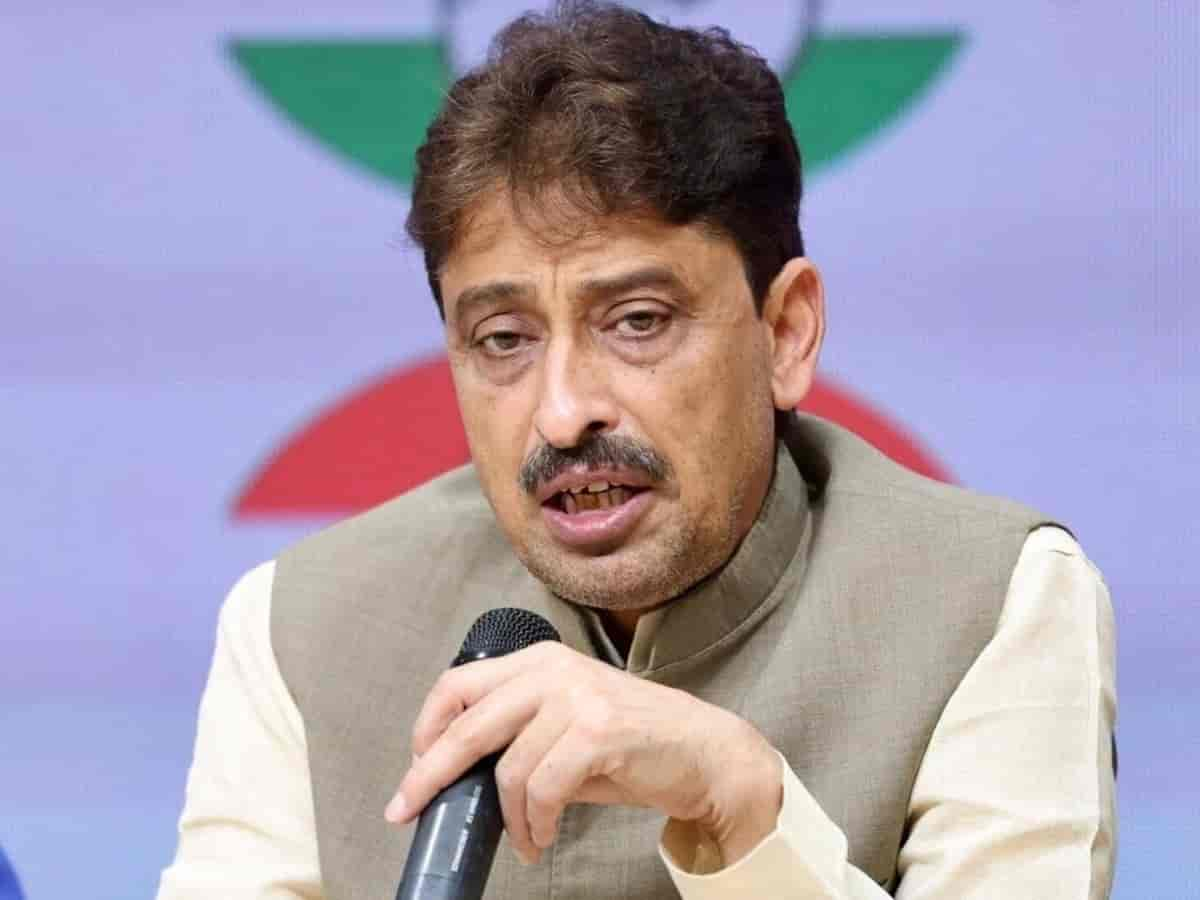
Seat-sharing negotiations between the Congress and the Samajwadi Party (SP) ahead of the 2027 Uttar Pradesh Assembly elections have entered a contentious phase, with Uttar Pradesh Congress working president and Saharanpur Lok Sabha MP Imran Masood insisting that his party will not settle for fewer than 107 constituencies. Speaking to news agency ANI on November 26, 2026, Masood anchored his demand in the historical precedent set during the 2017 Uttar Pradesh state polls, pointing out that when Akhilesh Yadav was the sitting Chief Minister, the Congress had contested on 107 seats. With the Chief Ministerial face for the 2027 polls yet to be formally decided, Masood maintained that there was little room for further debate over why the Congress expects a triple-digit seat allocation across Uttar Pradesh’s 403-member legislative assembly.
Why Is Imran Masood Insisting on the 2017 Seat-Sharing Benchmark?
According to statements made by Imran Masood to ANI, the Congress party’s organizational expectations in Uttar Pradesh are directly tied to past coalition benchmarks rather than the Samajwadi Party’s reported starting offer of 26 constituencies. “When he was the Chief Minister, we contested that many seats. Right now, the Chief Minister is yet to be decided,” Masood stated, dismissing speculation that the Congress might compromise on a substantially reduced tally such as 26 or 60 seats. His position has been reinforced by Uttar Pradesh Congress in-charge Rajendra Pal Gautam, who told the Hindustan Times that entering an alliance with fewer than triple-digit seats would defeat the purpose of building the party’s state unit. Party insiders indicate that while the Congress initially explored a broader share of 170 to 180 constituencies during internal deliberations, its negotiation team is firmly pressing for roughly 120 to 130 seats.
Objection to Unilateral Candidate Announcements in Saharanpur and Beyond
Beyond the headline seat numbers, Masood’s sharp reaction was triggered by the Samajwadi Party’s decision on November 25 to unilaterally announce its first list of five candidates for the 2027 Assembly elections while coalition talks were still underway in New Delhi. Crucially, the list included candidates for the Saharanpur and Behat assembly segments—both of which fall within Masood’s own Saharanpur parliamentary constituency and were among the seats the Congress had been eyeing. Questioning the Samajwadi Party’s approach to coalition etiquette, Masood told reporters that genuine alliances operate through joint press conferences, shared manifestos, and coordinated candidate announcements rather than unilateral declarations. He added that the Congress had prepared its own list of prospective nominees but had deliberately held back from releasing names in order to preserve coalition discipline.
Rahul Gandhi Framed as Central Anchor Against the BJP
While outlining his demands in Lucknow and New Delhi, Masood framed the broader electoral contest in Uttar Pradesh around national ideological lines. He stated that the primary political battle in the country is against the ideology of the Bharatiya Janata Party (BJP) and asserted that Congress leader Rahul Gandhi is the central figure leading that resistance. “Rahul Gandhi is the guarantee—he is the very ladder, the only path, to defeating the BJP,” Masood told ANI. At the same time, when asked by reporters about potential outreach toward Bahujan Samaj Party (BSP) chief Mayawati, Masood refrained from commenting on hypothetical alignments, noting that any political decision regarding the BSP rests solely with Mayawati herself.
Samajwadi Party’s Counter-Arguments and Recent Electoral Arithmetic
On the other side of the negotiating table, Samajwadi Party leaders have defended their initial 26-seat proposal by pointing to more recent electoral performance in Uttar Pradesh. Kairana SP MP Iqra Choudhary—a member of the SP’s negotiation committee—responded to Masood’s remarks by stating that her party will not cede any of the 111 assembly constituencies currently held by sitting SP legislators. SP leaders have pointed to the 2022 Uttar Pradesh Assembly results—in which the SP and Congress contested separately, with the SP winning 111 seats and securing a 32 percent vote share while the Congress won two seats with 2.3 percent of the vote—as the primary baseline for assessing winnability. Meanwhile, SP president Akhilesh Yadav struck a more conciliatory tone in an open message, characterizing the talks as “seat adjustment” rather than rigid seat-sharing and assuring allies that mutual respect would be maintained.
What the Deadlock Means for Uttar Pradesh’s 2027 Political Landscape
The public exchange between senior figures in Lucknow, Saharanpur, and New Delhi highlights the delicate balancing act facing the INDIA bloc as preparations accelerate for the 2027 state elections. While the 2017 alliance formula—under which the Congress ultimately contested 114 seats and won seven—remains a potent talking point for Congress leaders seeking organizational revival, the Samajwadi Party’s stronger showing in both the 2022 state polls and the 2024 Lok Sabha elections (where the SP won 37 seats and the Congress won six) gives Akhilesh Yadav’s camp substantial leverage. How both parties bridge the gap between Masood’s triple-digit demand and the SP’s winnability-focused formula will determine whether the opposition presents a unified front against the ruling BJP in Uttar Pradesh.