North India Statesman
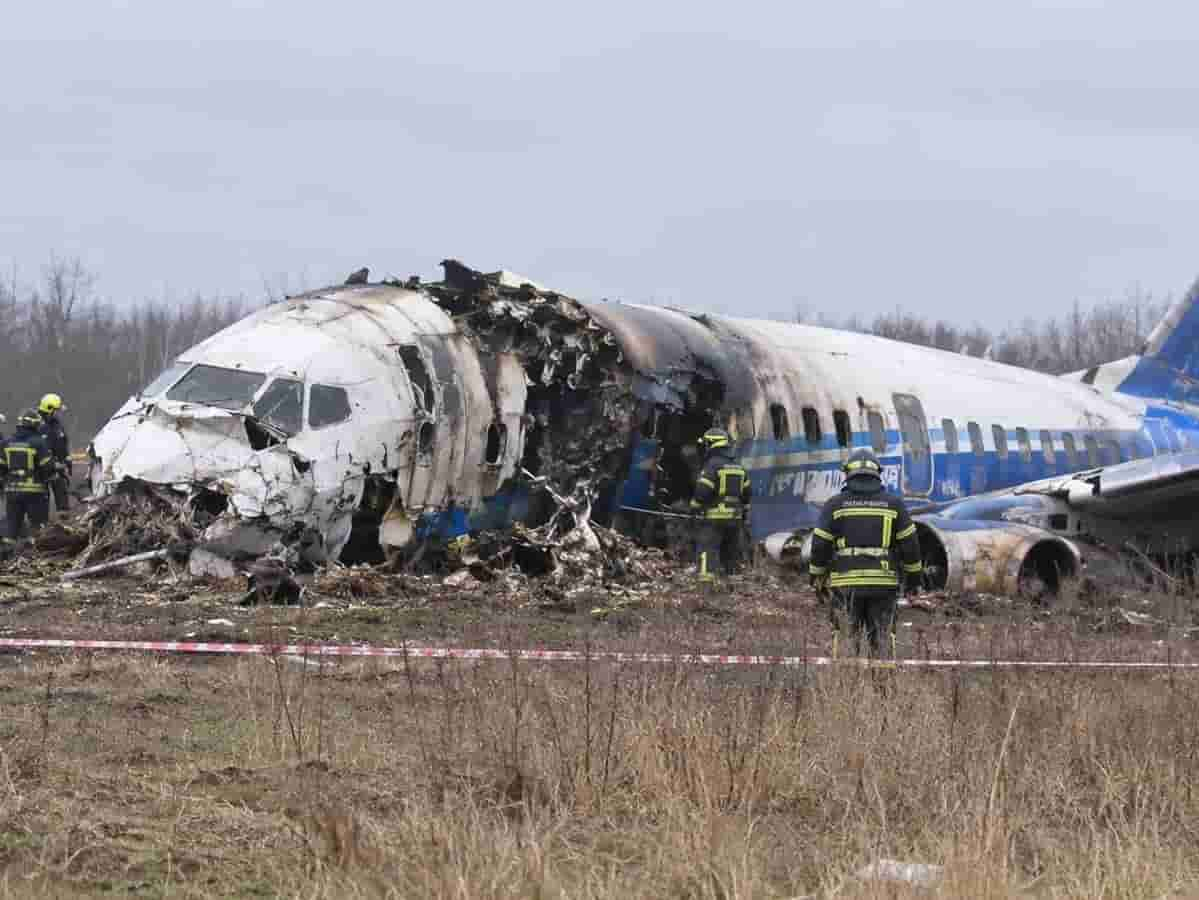
A catastrophic aviation tragedy struck southwestern Siberia late on Tuesday, November 17, 2026, when a Russian military transport aircraft caught fire mid-air and crashed near a residential village, killing all 17 people on board. According to local authorities and Russian media outlets including Izvestia and REN TV, the four-engine Antonov An-12 aircraft went down near the village of Yagunovo, roughly five kilometres south of the regional capital of Kemerovo in Russia’s Kuzbass coal-mining belt. Kuzbass Governor Ilya Seredyuk confirmed the crash at approximately 9:30 p.m. local time, announcing that an emergency response centre had been established at the scene alongside police, medical teams, emergency rescue crews, and Russian National Guard troops. While Russia’s Ministry of Defence has yet to release a formal casualty breakdown, Russian television reports indicated that five crew members and 12 passengers perished when the burning turboprop slammed into the ground and erupted in a powerful explosion.
How the Final Moments Unfolded Near Yagunovo Village
Preliminary flight tracking data and accounts cited by Russian news channels reveal that the ill-fated Antonov An-12BK was conducting a transit flight across Siberia, having departed from Tolmachevo Airport in Novosibirsk Oblast en route to Kansk Air Base in neighbouring Krasnoyarsk Krai. According to reports from the Russian Telegram news channel Baza, the aircraft suffered a critical aviation fuel leak mid-flight, triggering a severe onboard fire. Facing a rapidly deteriorating emergency in the night sky over Kemerovo Oblast, the flight crew attempted to divert toward nearby Alexei Leonov Kemerovo International Airport for an emergency landing. Eyewitnesses quoted by Izvestia and local media described seeing the plane already engulfed in flames in the air before it lost stability and plunged almost vertically toward the earth. Reports broadcast by REN TV noted that the pilots fought until their final seconds to steer the blazing aircraft away from populated residential buildings in Yagunovo, preventing civilian casualties on the ground before the plane struck open terrain near the village.
Emergency Response and Official Investigation Underway
Immediately following the impact and subsequent explosion, thick plumes of smoke and fire illuminated the night sky outside Kemerovo, prompting dozens of emergency vehicles to rush to the perimeter of Yagunovo. Governor Ilya Seredyuk stated via his official channel on the MAX messaging platform that the aircraft had been transiting the region when the accident occurred and confirmed that no residential structures or local villagers were harmed. Troops from the National Guard of Russia were swiftly deployed to cordon off the debris field and secure sensitive military equipment and flight data recorders. Investigators from Russia’s military prosecutor’s office and aviation safety commissions have opened a formal probe into whether technical failure, maintenance lapses, or severe Siberian weather conditions contributed to the suspected fuel leak and mid-air fire.
What Is the Soviet-Era Antonov An-12 Transport Aircraft?
The aircraft lost in the Kemerovo disaster—the Antonov An-12—is a workhorse of Russian military logistics with roots stretching back to the early Cold War. Designed in the Soviet Union during the 1950s and first flown in 1957, the high-wing, four-engine turboprop plane serves as the Russian equivalent of the American C-130 Hercules, prized for its ability to haul troops, armoured vehicles, and heavy cargo onto short or unpaved Siberian runways. Despite its rugged reputation, the aging fleet of An-12 transports—many of which are more than four decades old—has suffered a string of fatal accidents across Russia in recent years, including crashes in Irkutsk in 2021 and Belgorod in 2024. Aviation analysts point out that intense operational tempo, combined with Western aerospace sanctions restricting access to specialized components and diagnostic tools, has placed mounting strain on Russia’s legacy military and regional transport fleets. Tuesday’s tragedy also follows closely on the heels of an October 2026 crash in Russia’s Kaliningrad Oblast, where a Su-30 fighter jet went down during a training mission, renewing scrutiny over military flight safety across the country.
Why Aviation Safety in Russia Matters Globally and to India
Major aviation accidents involving Soviet-origin transport and military platforms carry broader international relevance, particularly for nations with longstanding defence and aerospace ties to Moscow. For India, which operates a large fleet of Russian-origin military transport aircraft and helicopters—including the twin-engine Antonov An-32, a direct evolutionary descendant of the An-12 family—technical findings from Russian air safety probes are closely monitored by defence planners and aerospace engineers. While the Indian Air Force maintains independent maintenance, overhaul, and life-extension programs for its transport fleet in collaboration with domestic facilities, recurring structural or fuel-system failures on aging Soviet-era airframes underscore the importance of rigorous fleet modernization and preventive diagnostics. As Russian authorities recover the black boxes from the frozen ground near Yagunovo, global aviation observers await definitive answers on what turned a routine Siberian transit flight into one of Russia’s deadliest military air disasters of 2026.