North India Statesman
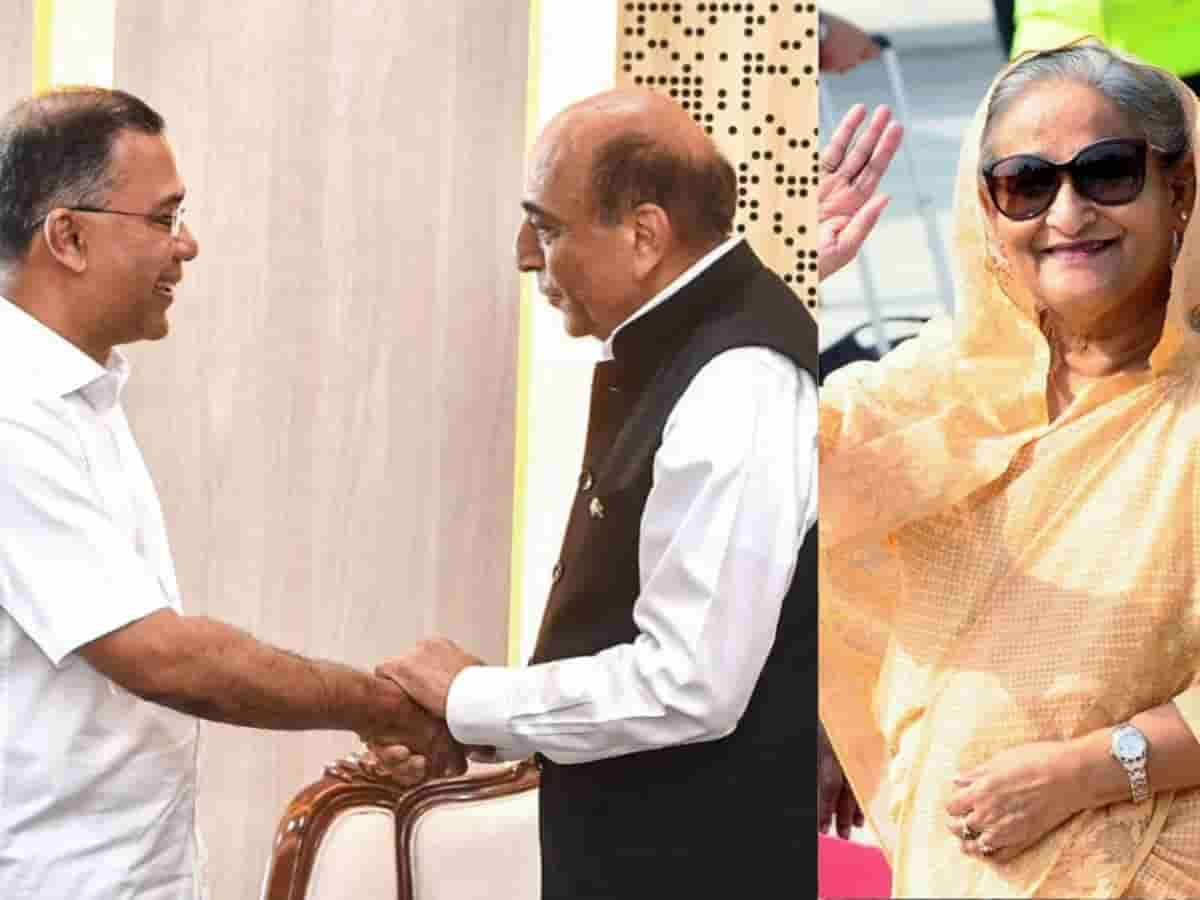
Diplomatic friction between New Delhi and Dhaka has flared once again over the fate of ousted Bangladeshi Prime Minister Sheikh Hasina, prompting a sharp warning from Bangladesh’s leadership that no foreign power can dictate terms regarding her return. Speaking at a media briefing in Dhaka on Tuesday, November 17, 2026, Bangladesh Prime Minister Tarique Rahman’s Information Adviser, Zahed Ur Rahman, declared pointedly that neither India nor any other country could impose conditions on how the former premier is brought back to face justice. His remarks came in direct response to circulating media reports suggesting that New Delhi had sought preconditions—such as a fresh trial and the right to appeal her death sentence—before acting on Dhaka’s formal extradition request. While Bangladeshi officials dismissed reports of formal backchannel negotiations over such terms, New Delhi’s measured official stance—describing the extradition request strictly as a “legal matter” requiring valid travel documentation—has fueled intense political debate across Dhaka and complicated efforts to reset bilateral ties.
What New Delhi Actually Said About Sheikh Hasina’s Extradition
Despite heated speculation in Dhaka’s political circles, the Indian Ministry of External Affairs (MEA) has maintained a tightly calibrated, legalistic position on the 79-year-old former leader, who has remained in India since fleeing a mass student-led uprising in August 2024. During his media briefings in New Delhi on November 10 and again on Friday, November 13, 2026, MEA Official Spokesperson Randhir Jaiswal repeatedly declined to engage in political rhetoric, stating succinctly that Sheikh Hasina’s extradition is a legal matter that will be dealt with accordingly. When pressed by reporters on whether an individual without a valid passport could be extradited, Jaiswal offered a practical observation that drew immediate attention across the border, noting that for the travel of people, a travel document is obviously required. He further redirected queries regarding Hasina’s request for a fresh Bangladeshi passport and national identity card (NID) to the Bangladesh High Commission in New Delhi. At the same time, Jaiswal emphasized that India desires a positive, constructive, and forward-looking relationship with Bangladesh, pointing to ongoing institutional engagement in trade, railways, water resources, and border management even after the fifth round of the India-Bangladesh Consular Dialogue scheduled in Dhaka for November 17 and 18 was postponed.
Why Dhaka Reacted Sharply to Reports of Preconditions
The diplomatic uproar in Bangladesh intensified following a BBC Bangla report claiming that New Delhi had sought assurances of a retrial and appellate rights before handing over Hasina, who was convicted in absentia of crimes against humanity by Bangladesh’s International Crimes Tribunal in November 2025 and sentenced to death. For the Bangladesh Nationalist Party (BNP) administration led by Prime Minister Tarique Rahman, the suggestion that India might attach conditions to the return of a convicted former ruler struck a raw nerve over national sovereignty and domestic accountability. Addressing journalists in Dhaka, Information Adviser Zahed Ur Rahman pushed back against the narrative, asserting that neither India nor any other nation could dictate terms on the issue, while expressing skepticism that New Delhi would formally attempt to do so. Earlier in the week, Bangladeshi officials had similarly rejected claims of any conditional talks, maintaining that Hasina’s return and subsequent legal fate must be governed exclusively by Bangladesh’s domestic laws and the bilateral extradition treaty signed between the two neighbours. Law Minister Asaduzzaman reinforced that stance, stating that Dhaka had completed every legal requirement on its end, leaving the next step squarely in India’s court, while clarifying that under existing Bangladeshi law she would not be entitled to appeal her conviction.
Hasina’s December Return Pledge and the Passport Standoff
Adding another layer of intrigue to the diplomatic standoff is Sheikh Hasina’s own public declaration that she intends to return to Bangladesh voluntarily in December 2026 to face legal proceedings, even at the risk of her life. Ahead of that announced timeline, her legal counsel emailed a formal application to the Acting High Commissioner at the Bangladesh High Commission in New Delhi requesting the issuance of a new Bangladeshi passport and national identity card. Hasina—whose Awami League party remains banned under both the former Muhammad Yunus-led interim setup and the current BNP government—accused authorities in Dhaka of taking a contradictory stance by demanding her extradition for months while refusing to issue the travel documents needed for her to return. She also stated that she had no intention of asking India to arrange her extradition, noting that extradition is a matter between two sovereign states and that New Delhi would act according to its own laws, policies, and national interests. Officials in Dhaka, however, dismissed her passport application as a “political stunt” lacking genuine intent, insisting that she cannot simply re-enter the country on her own political terms outside formal extradition channels.
What the Diplomatic Stalemate Means for India-Bangladesh Ties
For New Delhi, the controversy underscores the delicate balancing act required to manage ties with Dhaka’s post-uprising political establishment while upholding legal due process and regional stability. India shares a 4,096-kilometre land border with Bangladesh, along with deeply integrated supply chains, cross-border power grids, transit corridors connecting India’s northeastern states, and vital security cooperation across the Bay of Bengal. While senior Indian diplomats have sought to keep technical and economic channels open with Prime Minister Tarique Rahman’s government, the unresolved question of Sheikh Hasina’s presence in India continues to act as a political lightning rod in Dhaka. The postponement of the bilateral consular dialogue in mid-November highlights how sensitive consular and legal matters have become. Unless both capitals find a quiet diplomatic mechanism to insulate trade, connectivity, and border security from the legal dispute surrounding Hasina, bilateral relations between the two South Asian neighbours are likely to remain caught between public sovereignty assertions in Dhaka and cautious legal deliberation in New Delhi.