North India Statesman
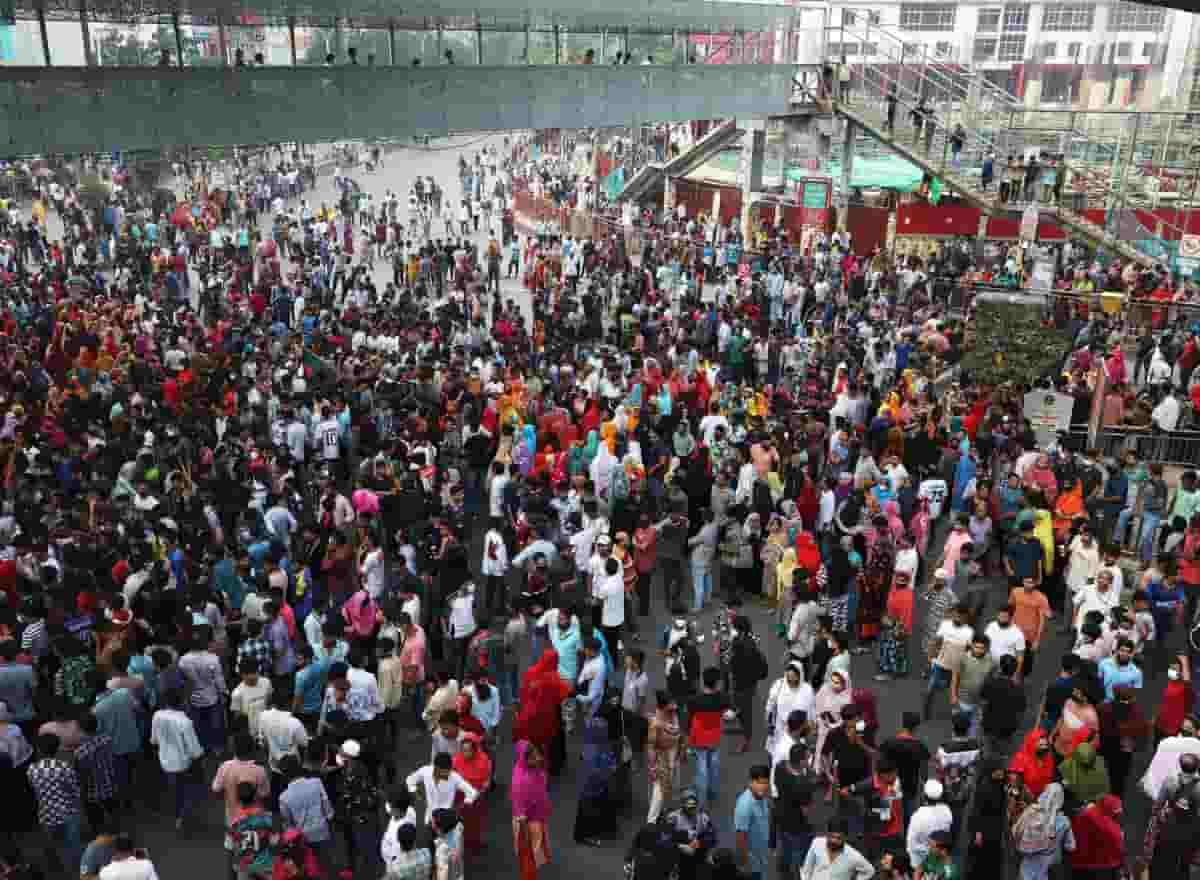
Bangladesh’s powerhouse ready-made garment sector has plunged into severe turbulence once again, paralyzing industrial belts, shuttering hundreds of manufacturing units, and sending shockwaves through the global fashion supply chain. Over five hundred apparel and textile factories across the key industrial zones of Ashulia, Gazipur, and Savar have halted production as thousands of garment laborers took to the streets. The sudden flare-up, coming roughly twenty-eight months after previous waves of unrest, marks a critical juncture for an industry that generates more than eighty percent of the nation’s total export revenue and sustains millions of livelihoods.
The confrontation began as localized demonstrations over unpaid arrears, statutory allowances, and demands for minimum wage adjustments against surging food inflation. Within hours, however, the protests metastasized across major highway corridors, leading to clashes with industrial security forces, vandalism of plant infrastructure, and blockades along national transport routes connecting manufacturing epicenters to the Port of Chittagong. With tensions escalating rapidly, mill owners and management groups opted to declare indefinite shutdowns under emergency labor provisions to safeguard capital assets and avoid catastrophic floor damages.
Industrial Corridors Paralyzed Across Ashulia and Gazipur
The manufacturing belts ringing Dhaka represent the dense nerve center of the global ready-made garment economy. In Ashulia and Gazipur, where dense clusters of high-volume export factories manufacture apparel for world-renowned high-street retailers, the disruption has been instantaneous. Eyewitness accounts and on-the-ground reports describe shuttered factory gates draped in security notices, deserted sewing floors, and heavy deployments of police, paramilitary units, and industrial patrol contingents attempting to secure the perimeter.
Workers gathered along major thoroughfares, voicing frustration over escalating living costs that have severely eroded monthly earnings over the past two years. Soaring prices of staple foodstuffs, cooking fuel, and tenement rents in peri-urban industrial enclaves have left lower-tier operators struggling to make ends meet. While owners cite contractual obligations, liquidity crunches, and surging energy utility bills as barriers to immediate wage hikes, labor unions argue that shop-floor workers have borne the brunt of macroeconomic volatility without adequate safety nets.
Anatomy of the Clash: Unresolved Grievances Boil Over
Industry observers note that this unrest does not exist in a vacuum. It echoes historic cycles of labor tension that previously erupted across Bangladeshi manufacturing centers twenty-eight months prior. While tri-partite wage agreements were hammered out during past rounds of negotiation, implementation has remained uneven, particularly among subcontracted third-tier units operating on razor-thin operating margins.
The spark behind the latest demonstrations ignited when several medium-sized suppliers failed to disburse overdue production incentives and overtime settlements ahead of major inventory delivery deadlines. The grievance spread quickly via peer messaging networks and local union wings across adjacent industrial parks. As thousands walked out in solidarity, sporadic clashes broke out between groups of demonstrators and industrial police armed with crowd-control measures, transforming commercial zones into active confrontation corridors.
Severe Threat to International Supply Chains and Global Brands
The abrupt closure of more than five hundred facilities presents an immediate vulnerability for international fashion conglomerates. Retail giants across Europe and North America depend heavily on Bangladesh for basic cotton apparel, knitwear, and denim. With seasonal fashion cycles operating on strict calendar turnarounds, even a week-long halt in sewing and finishing lines creates bottlenecks that reverberate across ocean shipping lines, customs checkpoints, and retail distribution centers worldwide.
International procurement offices based in Dhaka are closely tracking the security posture across production clusters. Factory executives acknowledge that delays in shipping spring and summer collections could trigger steep air-freight penalties, order cancellations, or discount demands from overseas buyers. More critically, repeated interruptions to manufacturing continuity prompt international sourcing directors to consider diversified production allocations across competing export economies such as Vietnam, India, Cambodia, and Indonesia.
Economic Stakes for a Nation Navigating Fragile Transitions
Beyond the immediate commercial impact on apparel manufacturers, the crisis touches the core of Bangladesh’s macroeconomic stability. The ready-made garment industry accounts for roughly ten percent of gross domestic product and employs over four million individuals, predominantly women from rural communities. Foreign currency receipts generated by apparel exports serve as the primary lifeline bolstering national foreign exchange reserves and underwriting basic import bills for fuel, fertilizer, and food grains.
Any extended production stoppage directly threatens banking sector stability, given the substantial volume of trade finance, letters of credit, and working capital loans exposed to garment conglomerates. Commercial banks are already managing constrained liquidity environments, and widespread production halts threaten to disrupt the timely liquidation of export receivables, compounding currency pressures and complicating overall monetary management.
Law Enforcement and the Tripartite Push for Resolution
In response to the deteriorating security situation, law enforcement agencies and industrial security committees have intensified protective cordons around critical export processing zones. Security officials have prioritized keeping arterial freight highways open to ensure the uninterrupted transit of raw fabric imported via land ports and finished garments moving south toward Chittagong Port.
Simultaneously, senior government officials, trade union representatives, and leadership from apex apparel manufacturing bodies have initiated high-level conciliation sessions. The immediate objective of these negotiations centers on establishing binding commitments regarding timely compensation disbursements, reviewing working condition concerns, and formulating clear grievance redressal frameworks. Industry leadership emphasizes that lasting peace across the production belts requires constructive engagement rather than punitive enforcement, urging all stakeholders to resume production under negotiated accords.
The Road Ahead: Restoring Confidence in the Manufacturing Ecosystem
As production remains stalled in over 500 manufacturing facilities, the immediate question facing the sector is whether administrative dialogue can de-escalate tensions before permanent commercial damage takes hold. Factory management groups express readiness to resume full operations the moment worker safety and plant security can be guaranteed, while labor groups demand verifiable guarantees against retaliatory dismissals and prompt execution of agreed compensation formulas.
The coming days will prove decisive in determining whether industrial calm can be restored through institutional mediation. For Bangladesh’s signature export industry, navigating this wave of unrest requires an equitable balance between safeguarding labor welfare amidst acute inflationary pressures and maintaining the operational reliability and cost competitiveness that established the nation as a premier global manufacturing powerhouse.