North India Statesman
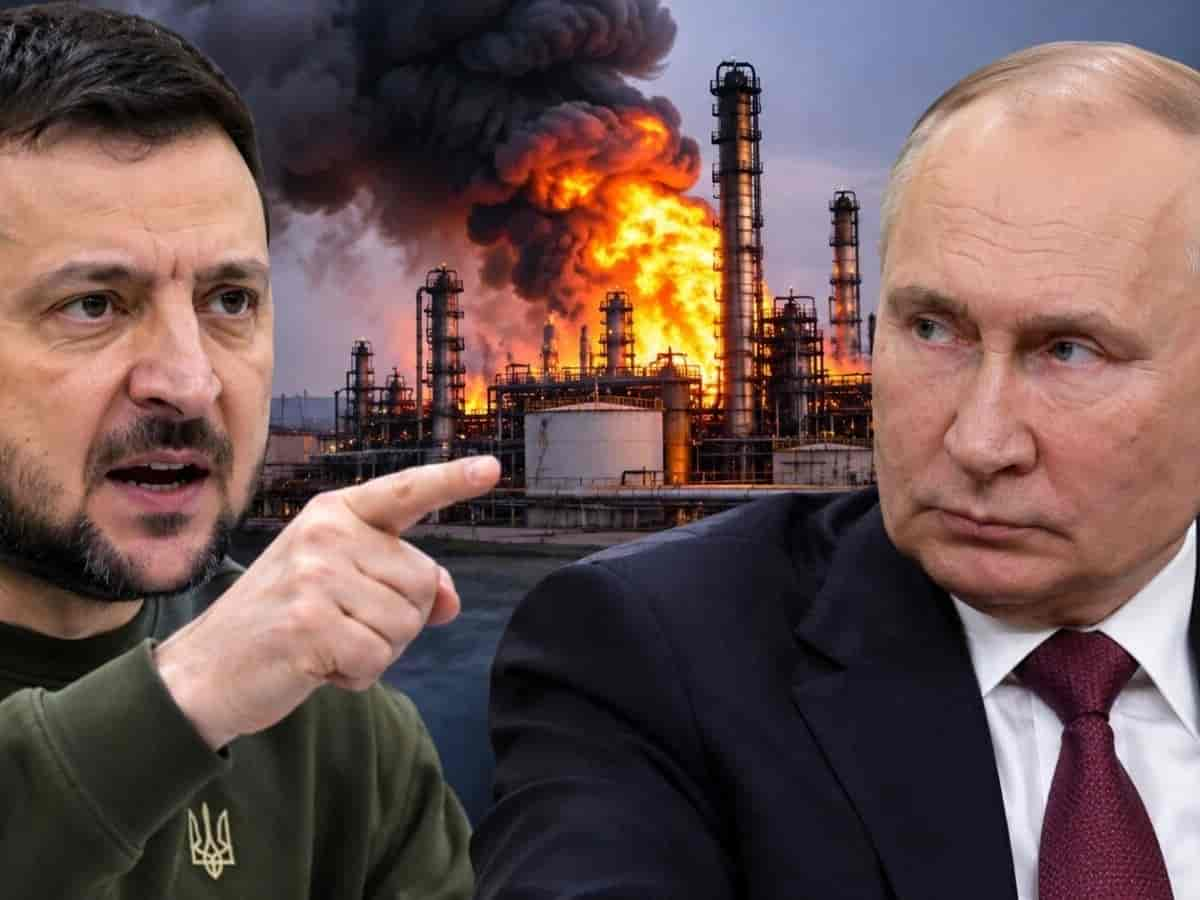
Ukraine has delivered a blunt diplomatic response to Russian President Vladimir Putin after Moscow complained about ongoing drone strikes on its domestic oil refining infrastructure. Ukrainian Foreign Minister Andrii Sybiha stated unequivocally that the Kremlin can immediately stop Ukrainian attacks on Russian energy facilities simply by ordering an end to its full-scale invasion. The sharp exchange erupted late Tuesday following televised remarks by Putin, who accused Kyiv of ignoring appeals from United States President Donald Trump to refrain from targeting Russian refineries and warned that Moscow’s retaliation would be inevitable. Writing on social media platform X, Sybiha dismissed the Russian leader’s grievances as hypocritical, noting that Moscow continues to bombard Ukrainian cities and critical power grids daily while demanding immunity for its own fuel supply chain.
Why Is Ukraine Targeting Russian Oil Refineries?
Ukrainian military strategists view Russia’s oil refining sector as a legitimate and vital target because fuel revenues and refined petroleum products directly sustain the Kremlin’s war machine. By deploying long-range domestically produced drones against processing plants deep inside Russian territory, Kyiv aims to disrupt military logistics, create domestic fuel shortages, and squeeze the export earnings that fund Russian military operations. Just days before the diplomatic spat, Ukrainian forces confirmed strikes on the Syzran and Kuibyshev oil refineries in Russia’s Samara region, adding to a sustained campaign that has repeatedly forced major Russian processing hubs offline for repairs. In his public retort, Sybiha pointed out that Putin appeared far more concerned about damaged industrial infrastructure than the staggering human toll of the conflict, citing Ukrainian military estimates of 432,000 Russian battlefield casualties this year alone without decisive territorial gains. “Clearly, he doesn’t care about them. Stop complaining. End the war,” Sybiha wrote, encapsulating Kyiv’s refusal to grant Moscow a unilateral sanctuary for its energy assets.
What Did Vladimir Putin Say About US Appeals and Retaliation?
During a high-level meeting with Russian officials, President Vladimir Putin claimed that Kyiv was actively ignoring what he described as a direct request from US President Donald Trump to halt strikes on Russian oil facilities. Putin characterized the continued drone raids as a deliberate escalation and asserted that a forceful Russian response was unavoidable. Simultaneously, the Russian leader called for accelerating the construction of new refining capacities in eastern Russia to shield vital fuel production from the reach of Ukrainian unmanned aerial vehicles. Analysts observe that invoking Washington’s diplomatic outreach serves a dual purpose for Moscow: attempting to drive a wedge between Kyiv and the White House while framing Russia’s own devastating winter bombardment of Ukraine’s electrical grid as a reactive measure rather than an ongoing offensive strategy.
Winter Energy Warfare Intensifies Across Eastern Europe
The war of words underscores a dangerous escalation in energy infrastructure warfare as freezing winter temperatures settle across Eastern Europe. Over the past several weeks, Russian missile and drone barrages have heavily damaged Ukrainian thermal power plants, substations, and gas distribution networks, triggering widespread rolling blackouts and raising urgent humanitarian concerns from Kyiv’s international partners. Ukrainian officials maintain that expecting Kyiv to leave Russian oil refineries untouched while millions of Ukrainian civilians face sub-zero temperatures without reliable electricity or heating is strategically untenable. By holding Russia’s refining capacity at risk, Ukraine seeks to establish a form of asymmetric deterrence, forcing Moscow to divert scarce air defense systems away from the front lines to protect vast industrial complexes across western and central Russia.
Global Oil Markets and Economic Implications for India
For major energy-importing nations, including India, every escalation involving Russian refining and export infrastructure carries significant economic weight. Since 2022, India has emerged as one of the largest buyers of discounted Russian seaborne crude, processing vast volumes at domestic refineries in Jamnagar, Paradip, and Vadinar for both local consumption and global fuel exports. While strikes on Russian domestic refineries primarily reduce Russia’s ability to export refined diesel and gasoline—sometimes even leaving more raw crude available on the global market—persistent damage to storage depots, pipelines, and port terminals introduces volatility into international Brent crude benchmarks and maritime freight rates. Energy market watchers in New Delhi and Mumbai closely monitor these developments, as sustained disruptions to Eurasian fuel supplies can tighten global middle-distillate margins and influence domestic inflation calculations across South Asia.
Diplomatic Deadlock Over Infrastructure Ceasefire Proposals
Despite intermittent diplomatic chatter surrounding potential partial truces that would spare energy facilities on both sides, the latest clash between Kyiv and Moscow highlights how far apart the two capitals remain. Ukrainian leadership insists that any partial ceasefire limited solely to energy infrastructure would disproportionately benefit Russia, granting Moscow breathing room to repair its crippled refining sector and stockpile fuel for spring offensives while continuing ground assaults across eastern Ukraine. Consequently, Foreign Minister Andrii Sybiha’s message reflects a firm consensus in Kyiv: peace in the skies over Russian refineries is directly tied to the withdrawal of Russian troops and the complete cessation of hostilities. Until the Kremlin chooses to halt its military campaign, Ukraine has made clear that Russia’s oil industry will remain squarely in the crosshairs.