North India Statesman
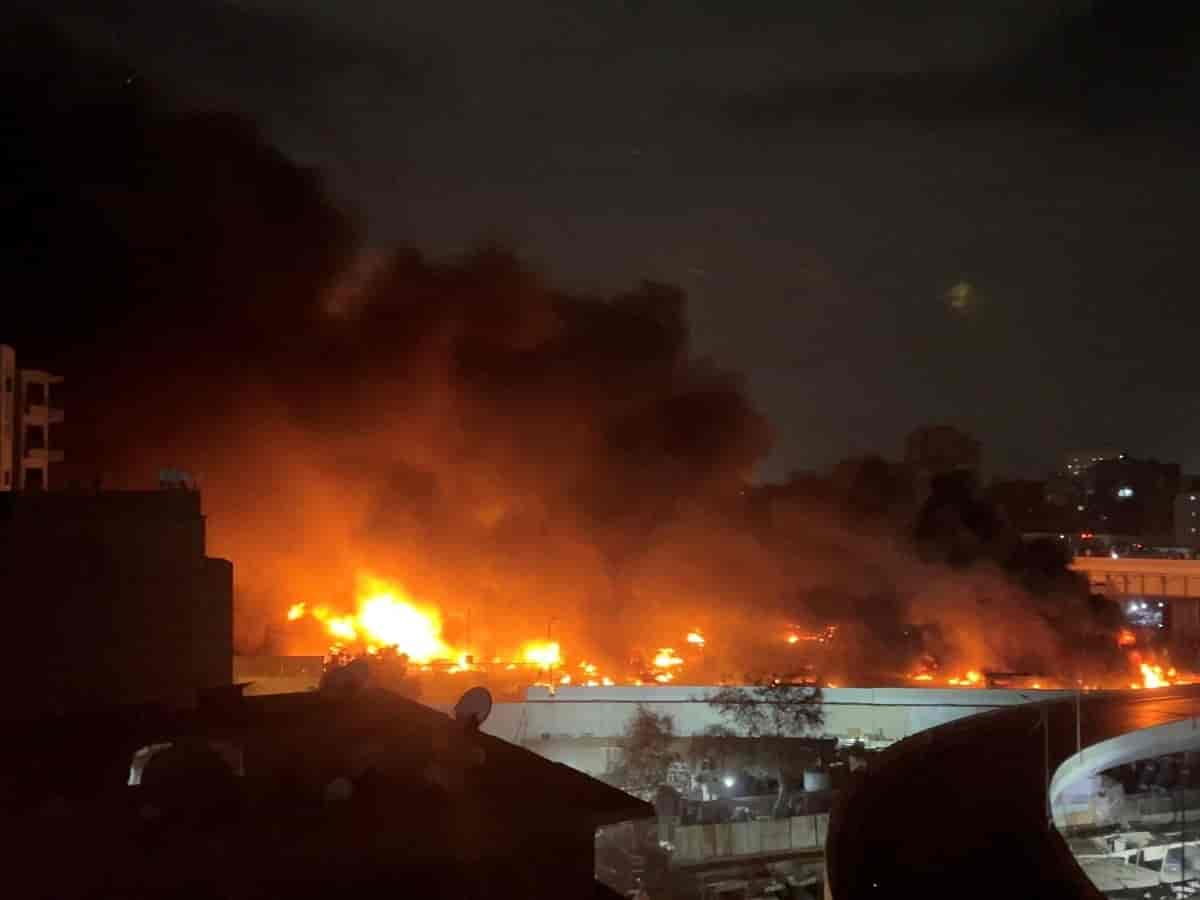
A catastrophic highway disaster struck Greater Cairo on Wednesday evening after a heavy tanker truck loaded with petroleum products overturned on the capital’s busy Ring Road, unleashing a wall of fire that killed at least 31 people and left 21 others injured. The tragedy unfolded shortly after 6:00 PM local time along a heavily congested stretch of the elevated arterial highway in the densely populated Al-Warraq district of Giza Governorate, a major residential and commuter hub on the outskirts of Cairo. Within seconds of the vehicle rolling over, flammable fuel spilled across the tarmac and ignited, transforming bumper-to-bumper evening rush-hour traffic into a deadly trap. Emergency responders and firefighters rushed to the scene as thick plumes of black smoke billowed into the night sky, while horrified bystanders watched flames consume dozens of cars and motorcycles stranded in the middle of the roadway.
How Did the Fire Start on Cairo’s Ring Road?
According to initial findings released by Egyptian security officials and the Ministry of Health, the inferno began when a commercial transport vehicle carrying petroleum products lost stability, crashed, and overturned on the Ring Road near the Al-Warraq area of Imbaba. The violent impact ruptured the tanker’s containment structure, causing highly volatile liquid fuel to gush across multiple lanes of traffic before sparking an immediate, high-intensity blaze. Because the accident occurred during peak evening commuter hours on a vital artery linking the governorates of Cairo, Giza, and Qalyubia, drivers in adjacent lanes had almost no space to maneuver or reverse away from the spreading pool of burning fuel. Eyewitnesses at the scene recounted that the flames engulfed nearby passenger vehicles so rapidly that occupants trapped inside had virtually no time to unlock their doors and escape. In total, the intense heat and raging fire completely charred 27 vehicles, including private cars, commuter microbuses, and motorcycles.
Heroic Rescue Efforts and Emergency Response in Giza
As news of the blaze reached emergency dispatch centers, Egyptian authorities launched a large-scale rescue and firefighting operation. The Ministry of Health deployed 39 ambulances alongside civil defense firefighting units to battle the petroleum fire and evacuate survivors from the mangled wreckage. Heartbreaking accounts emerged from the crash site detailing how bystanders and fellow commuters risked their own lives in an attempt to pull trapped motorists from burning vehicles before secondary flare-ups overwhelmed the area. Egyptian Health Minister Khaled Abdel Ghaffar confirmed that the injured were rushed to four nearby hospitals across Cairo and Giza to receive urgent treatment for severe burns and acute smoke inhalation, noting that several patients remained in critical condition. Traffic authorities sealed off the affected section of the Ring Road for several hours while heavy cranes removed the charred remains of the tanker and cleared burnt debris before gradually reopening lanes to traffic.
DNA Testing Launched as President El-Sissi Offers Condolences
Following the extinguishing of the blaze, Egyptian President Abdel-Fattah el-Sissi issued an official statement extending his deepest condolences to the bereaved families and wishing a swift recovery to those hospitalized. Meanwhile, Egypt’s Public Prosecutor’s Office opened an urgent criminal and technical investigation to determine the exact mechanical or human factors that caused the fuel tanker to overturn. Because the extreme temperatures of the petroleum fire burned many victims and their personal identification documents beyond visual recognition, forensic teams were immediately ordered to collect DNA samples from relatives to accurately identify the deceased before releasing remains for burial. Health officials also cautioned that the death toll of 31 remained preliminary given the severity of injuries sustained by several hospitalized survivors.
Highway Safety Challenges Across Rapidly Expanding Urban Corridors
The Al-Warraq disaster stands as one of the deadliest road incidents in Egypt’s recent history, reigniting urgent public debate over commercial transport regulations and highway safety across the Middle East and North Africa. Over the past decade, Egypt has invested heavily in expanding its national road network, constructing wide multi-lane highways, bridges, and ring roads to ease chronic urban congestion and support rapid population growth. Despite modern infrastructure upgrades, road safety analysts point out that excessive speeding, overloaded commercial trucks, mechanical wear, and inconsistent enforcement of hazardous-material transport rules continue to claim thousands of lives every year—including earlier multi-vehicle pileups in Beni Suef that killed 21 people in January. For rapidly urbanizing nations worldwide, including India where high-speed expressways and dense urban ring roads in cities like Delhi, Mumbai, Bengaluru, and Lucknow carry heavy freight alongside daily commuters, the Cairo tragedy serves as a stark reminder of the need for strict speed governors, dedicated hazardous-cargo corridors, and rapid-response fire suppression protocols.