North India Statesman
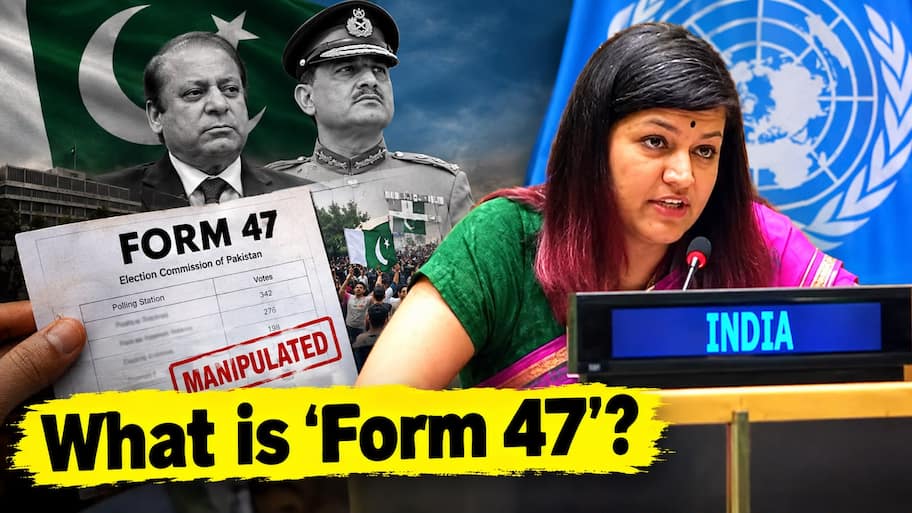
In a fierce diplomatic offensive at the United Nations General Assembly (UNGA), India delivered an uncompromising Right of Reply against Pakistan Prime Minister Shehbaz Sharif, systematically tearing down Islamabad’s democratic standing. First Secretary at India’s Permanent Mission to the UN, Petal Gahlot, specifically designated the current ruling dispensation in Pakistan as a “Form 47 government”—a direct and scathing reference to the controversial electoral document that critics and citizens allege was manipulated by Rawalpindi’s military establishment during the 2024 elections to manufacture a victory for the Sharif coalition.
“Hypocritical Homilies”: India Calls Out Military Stranglehold
Dismantling Shehbaz Sharif’s address, Gahlot questioned Pakistan’s moral authority to lecture the international community on fundamental human rights while presiding over a state where military generals pull the administrative strings. She pointedly highlighted Sharif’s open veneration of military chief Field Marshal Syed Asim Munir on the world stage, emphasizing that the unelected armed forces hold complete supremacy over civilian figureheads.
“We heard some hypocritical homilies about democratic rights and human values from a regime whose capital at this very moment is being fortified against its own people,” Gahlot declared before the assembly. Taking aim at the deep-seated military influence running the state apparatus, she asserted: “And this was the very entity which was the subject of such deep genuflection before us today by the representative of Pakistan.”
What Is Form 47 and Why Did It Fuel Election Outcry?
In Pakistan’s statutory electoral framework, Form 47 serves as the provisional consolidated statement tabulating unverified votes collected across all polling stations within a parliamentary constituency before formal verification is completed. During the general elections, opposition leaders—primarily supporters of Imran Khan’s Pakistan Tehreek-e-Insaf (PTI)—along with independent civic observers, flagged massive numerical discrepancies between the primary, on-ground tally sheets (Form 45) and the centralized final counts (Form 47).
According to PTI and opposition representatives, initial ground-level counts across dozens of constituencies showed independent candidates establishing commanding leads on polling night. However, following unprecedented delays, localized mobile internet blackouts, and opaque returning officer processes, revised Form 47 records were issued declaring PML-N and allied candidates as the winners. This widespread perception of electoral engineering gave rise to the mocking moniker “Form 47 government,” which Pakistan’s domestic opposition and public routinely use to challenge the ruling coalition’s legitimacy.
Exposing Islamabad’s Fragile Domestic Mandate on the Global Stage
By deploying the “Form 47” label directly on the floor of the United Nations, India effectively elevated a domestic electoral grievance into a prominent international critique. The strategic rebuttal countered Sharif’s attempts to target India on Jammu and Kashmir by demonstrating that Islamabad’s ruling elite lacks legitimate popular backing at home, relies on heavy military backing to survive, and presides over internal suppression while continuing to export cross-border terrorism.