North India Statesman
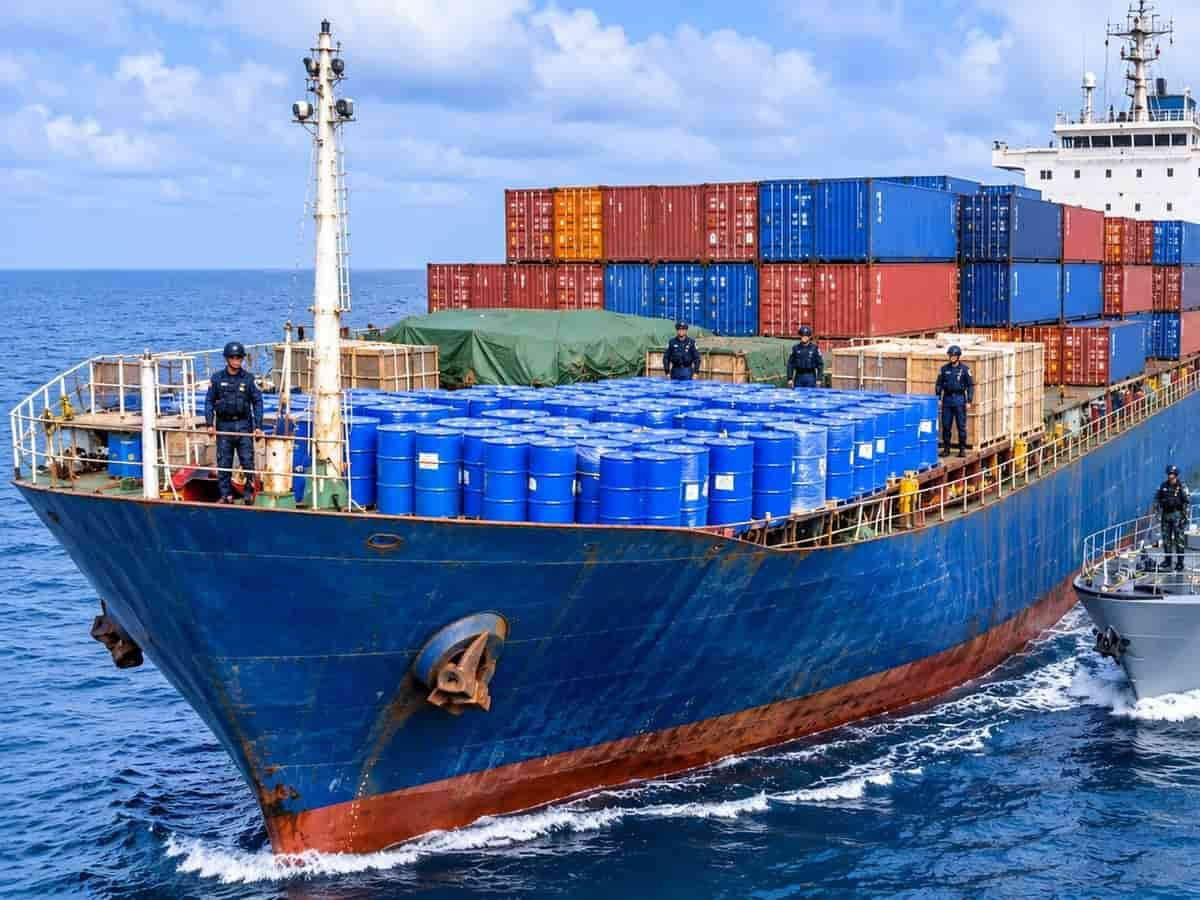
A major maritime security operation in Southeast Asian waters has uncovered a massive, potentially dangerous consignment travelling from China toward Bangladesh. The Indonesian Navy intercepted and detained a Comoros-flagged cargo vessel carrying 405 tonnes of sodium perchlorate—a strategic chemical oxidiser capable of producing propellants for up to 100 missiles—alongside millions of unregistered blank 4G LTE SIM cards. Although the vessel, identified as MV Star Line (IMO: 8356962), was stopped on November 7, 2026, in waters off Belawan in North Sumatra, naval authorities officially disclosed the seizure during a press briefing on November 20. For strategic observers and readers across India—from defence analysts in New Delhi and Kolkata to citizens in Unnao, Lucknow, and across Uttar Pradesh—the interception of such a sensitive dual-use cargo headed toward Mongla Port in the Bay of Bengal raises urgent regional security questions.
How the Indonesian Navy Intercepted MV Star Line
According to details shared by Rear Admiral Denny Septiana, Commander of Indonesian Naval Regional Command I (Koarmada I), the interception occurred during routine maritime surveillance off the coast of Belawan. The vessel had departed from Lianyungang Port in eastern China and was bound for Mongla Port in southern Bangladesh when it entered Indonesian waters, ostensibly to replenish fuel supplies. However, personnel aboard the Indonesian Navy patrol boat KRI Sigalu-857 noticed erratic navigation patterns indicating the ship was operating outside its designated maritime corridor. When naval officers attempted to hail the ship over marine radio, the crew allegedly failed to respond. Following clearance from Koarmada I headquarters, boarding teams detained the vessel and discovered severe discrepancies in its registration papers—which carried a suspended status despite claiming validity until October 2027—as well as inconsistencies in its cargo manifest.
What Was Found Inside the Containers?
A thorough inspection of all 36 shipping containers aboard MV Star Line revealed a dual consignment that immediately alarmed defence and intelligence officials. Fifteen containers were packed with approximately 405 tonnes of sodium perchlorate. In addition to the chemical stockpile, naval inspectors uncovered 54 pallets loaded with millions of unregistered, blank 4G LTE SIM cards. Rear Admiral Septiana confirmed that based on standard military propellant calculations, the seized volume of sodium perchlorate was substantial enough to manufacture propellants for roughly 100 missiles. While the Indonesian Navy questioned the crew on board, authorities have not yet publicly disclosed the identities of the shipping company, the Chinese exporters, or the intended Bangladeshi importers, noting that the vessel was stopped before filing its Import General Manifest at Mongla.
What Is Sodium Perchlorate and Why Is It Strictly Monitored?
Sodium perchlorate is an inorganic chemical compound composed of sodium, chlorine, and oxygen that functions as a powerful oxidising agent. While it does not ignite or explode on its own under normal conditions, it dramatically accelerates combustion when combined with fuel sources. In legitimate civilian industries, sodium perchlorate is used in laboratory reagents, DNA extraction for biopharmaceuticals such as insulin, and certain chemical manufacturing processes. However, in defence and aerospace engineering, it is a critical precursor for ammonium perchlorate—the primary solid-fuel oxidiser used in tactical ballistic missiles, artillery rockets, and space launch vehicles. Because handling 405 tonnes of an industrial oxidiser poses severe fire and explosion hazards—and carries obvious weapons-proliferation risks—international maritime regulations strictly govern its documentation, packaging, and end-user verification.
Why the Shipment Raises Strategic Questions in the Bay of Bengal
The destination of the consignment has drawn intense scrutiny across South Asia. Security analysts point out that Bangladesh does not currently possess an indigenous missile-manufacturing programme capable of absorbing 405 tonnes of rocket-grade propellant precursor. Combined with the discovery of millions of untraceable blank SIM cards—often linked to cyber fraud, clandestine communications, or illicit networks—the cargo has sparked concern over whether Bangladesh was the final end-user or a transit hub for non-state actors or third-party networks operating along the Bay of Bengal and Myanmar borderlands. As Indonesian investigators continue examining the vessel’s crew and financial trail, Indian maritime and intelligence agencies are expected to monitor the probe closely given the proximity of Mongla Port to India’s eastern coastline.