North India Statesman
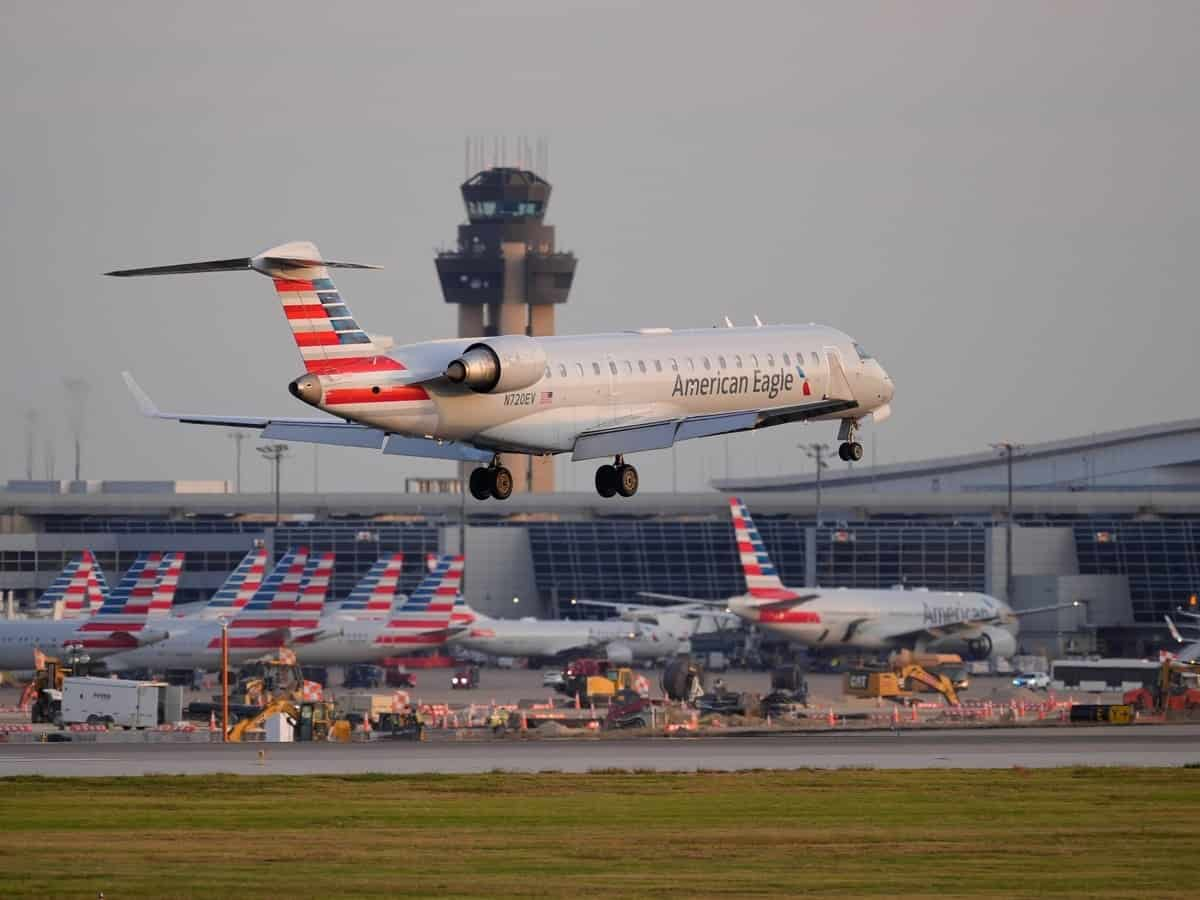
Air travel across the United States plunged into unprecedented turmoil over the weekend after the Federal Aviation Administration (FAA) ordered a rare nationwide ground stop, halting departing flights from coast to coast for more than four hours. Marking the longest nationwide aviation shutdown since the aftermath of the September 11, 2001 attacks—25 years ago—the crisis stranded hundreds of thousands of passengers, disrupted international connections including India-bound long-haul routes, and triggered over 15,000 flight cancellations across Friday and Saturday. As travellers queued inside packed terminals from New York and Chicago to Los Angeles and Dallas, officials confirmed that a critical breakdown inside the country’s ageing air traffic control communications network forced aviation authorities to freeze takeoffs out of an abundance of caution.
The Technical Failure Behind the Nationwide FAA Ground Stop
According to official briefings by the FAA and the US Department of Transportation, the disruption began around 3:30 PM Eastern Time on Friday, November 13, 2026, when air traffic controllers detected severe instability across telecommunications lines linking all 22 Air Route Traffic Control Centers nationwide. These regional control centers are the nerve centers of American airspace, responsible for guiding thousands of aircraft cruising between airports. Transportation Secretary Sean Duffy explained that legacy switches and routers inside the FAA’s telecommunications infrastructure became overloaded with data, causing them to transmit inconsistent information and creating intermittent gaps in radio and radar feeds. Unable to guarantee uninterrupted communication between ground controllers and pilots in the sky, the FAA issued an emergency nationwide ground stop at 3:54 PM ET, freezing all domestic departures while roughly 2,500 to 3,500 airborne planes were safely guided to their destinations.
Why Outdated Aviation Infrastructure Triggered a 25-Year Record Shutdown
While the ground stop was lifted after four hours and 21 minutes at 8:15 PM ET on Friday once engineers isolated and disabled malfunctioning router functionalities, the incident exposed deep vulnerabilities in America’s decades-old aviation backbone. Homeland Security Secretary Markwayne Mullin and Transportation Secretary Duffy revealed that the FAA has been attempting to integrate modern digital hardware onto legacy copper-wire telecommunications lines and equipment dating back to the 1970s, 1980s, and 1990s. Nearly one-third of the US air traffic control network still relies on outdated copper circuits, time-division multiplexing (TDM) systems, and aging radar components whose replacement parts are no longer manufactured. When new network equipment and router updates pushed higher data volumes through those older switches, the patchwork infrastructure buckled under the load.
Was a Cyberattack or Global Tech Outage Involved?
Because the FAA shutdown occurred on the same day as a separate global Microsoft cloud disruption, speculation quickly spread online about a potential cyberattack or coordinated digital sabotage. However, senior US security officials firmly ruled out both possibilities. Addressing reporters at the White House, Homeland Security Secretary Markwayne Mullin stated that federal cyber investigators found zero digital footprints, external intrusion, or evidence of any nefarious actor. The FAA also clarified that the outage was unrelated to its newly deployed SMART air traffic management software, attributing the failure strictly to mechanical and hardware instability within the legacy L3Harris-maintained telecommunications routing network.
Massive Ripple Effect on Flights, Airlines, and Global Travellers
Even though airspace restrictions were lifted on Friday night, the operational domino effect rippled across global aviation throughout the weekend. According to flight-tracking platform FlightAware, roughly 9,200 flights were cancelled and over 7,000 delayed on Friday alone, followed by another 6,200 cancellations on Saturday as airlines struggled to reposition displaced aircraft and timed-out flight crews. International passengers flying between North America and hubs in Europe and India—including New Delhi and Mumbai—faced missed onward connections and rolling schedule adjustments. Calling the episode a wake-up call, the US administration has renewed its urgent appeal to Congress for $50 billion in emergency modernization funding to replace the patchwork legacy network with a unified next-generation air traffic control system.