North India Statesman
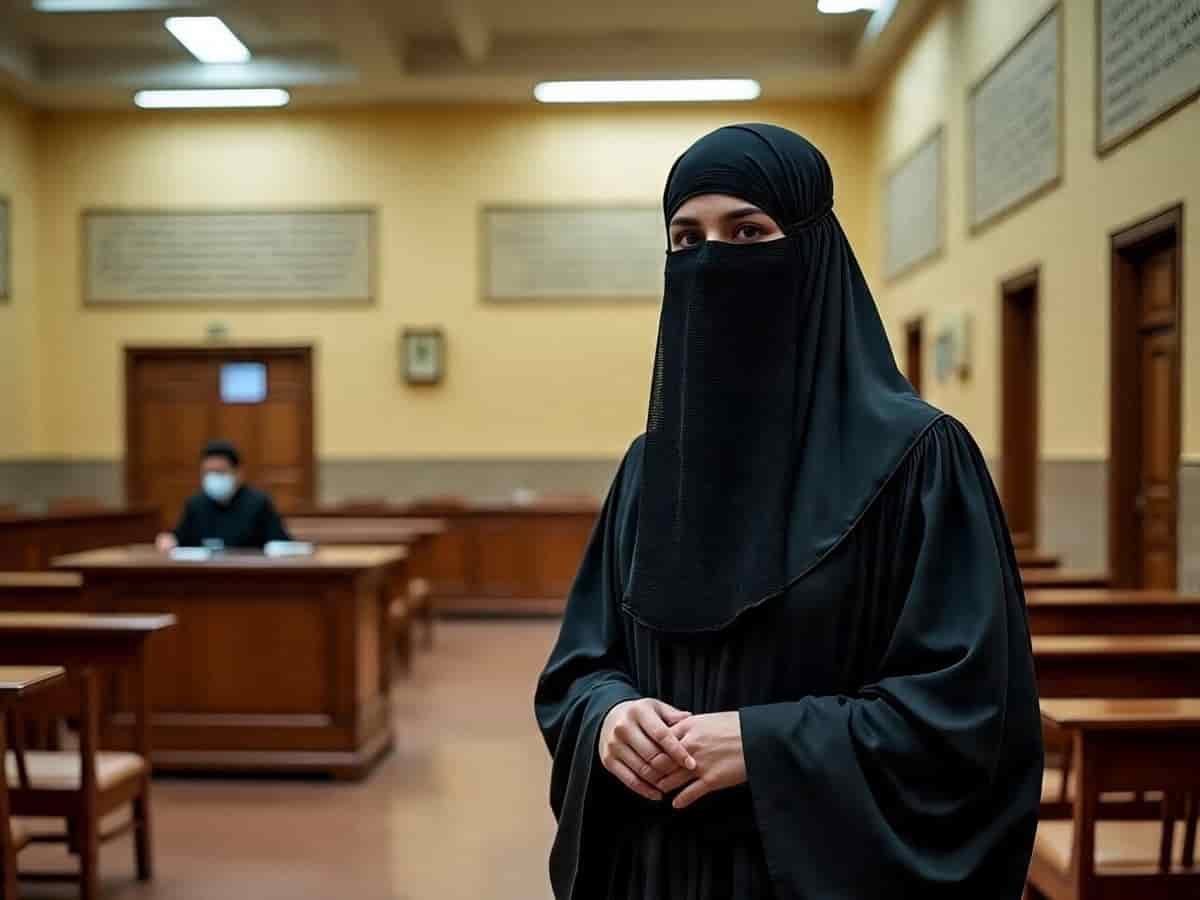
Italy has enacted sweeping new education rules that prohibit full-face coverings such as burqas and niqabs inside school premises while capping the proportion of non-Italian-speaking foreign students in first-year classrooms at 30 per cent. Spearheaded by Prime Minister Giorgia Meloni’s right-wing coalition government, the legislation—known as the Decreto Scuola—cleared its final parliamentary hurdle in the Chamber of Deputies on November 26, 2026, following earlier Senate approval on November 20. Framed by Rome as a practical step to bolster classroom integration, protect national security, and uphold academic standards, the law has triggered fierce debate across Italy and drawn sharp interest from global observers, including Indian diaspora communities and education policy watchers in New Delhi, Mumbai, and Bengaluru.
How the Face-Covering Ban and Fines Work
Under the newly approved provisions, students participating in regular classes, curricular activities, and school-run extracurricular programmes across Italy are strictly barred from wearing garments that conceal the face. The rule specifically targets the burqa—which covers the entire body and face with a mesh screen—and the niqab, which leaves only the eyes visible. By contrast, the hijab, which covers the hair and neck without obscuring facial features, remains permitted inside educational institutions. Violations of the face-veil prohibition carry financial penalties ranging from €200 to €1,000, with parents or legal guardians held financially and legally accountable whenever the student involved is a minor. Meloni defended the measure as a matter of both security and women’s dignity, stating that obliging young girls to cover their faces hinders genuine social inclusion.
Rules Behind the 30% Cap on Foreign Students
Alongside the dress-code restrictions, the reform introduces a 30 per cent ceiling per classroom on students of foreign origin who lack adequate proficiency in the Italian language or sufficient prior schooling in Italy, scheduled to take effect from the 2027–28 academic year. Crucially, the cap does not apply uniformly to every child with an immigrant background. Pupils born and raised in Italy, those who demonstrate sufficient command of Italian, or students who have already completed at least two years of nursery school or three years within the Italian school system are exempted from the quota. To support adjustment, the law also funds dedicated Italian language courses for both students and foreign parents. Education Minister Giuseppe Valditara estimated the cap will directly impact roughly 1,000 classrooms—about 0.3 per cent of classes nationwide—even though non-citizen pupils represent around 11.2 to 11.6 per cent of Italy’s overall student population.
Why Meloni’s Government Pushed the Reform Ahead of 2027 Polls
The passage of the decree comes at a pivotal political moment in Rome, with Italy scheduled to hold general elections next year. Meloni has described the legislation as “common-sense tools that do not divide,” arguing that high concentrations of non-Italian-speaking pupils in urban neighbourhoods create isolated “ghetto classes” that slow down learning for both native and immigrant children. Political analysts in Europe note that the move also reflects mounting electoral pressure on Meloni’s Brothers of Italy party from the far-right National Future (Futuro Nazionale) movement led by former army general Roberto Vannacci, who has campaigned on an even harder line against immigration.
Opposition Backlash and European Context
Inside the Italian Parliament, the bill passed by 142 votes to 112 with four abstentions amid vocal protests from opposition lawmakers. Democratic Party leader Elly Schlein condemned the legislation as a “witch hunt at the expense of children,” while opposition MPs held up banners inside the chamber declaring, “At school nobody is a foreigner”. Critics argue that underfunded public schools need stronger teaching resources and structural investment rather than administrative barriers that risk marginalising migrant families. With Italy joining European neighbours such as Switzerland and Portugal in tightening regulations on face coverings, the implementation of Meloni’s school decree over the coming academic cycle will serve as a major test case for how Europe balances cultural integration, security, and minority rights in the classroom.