North India Statesman
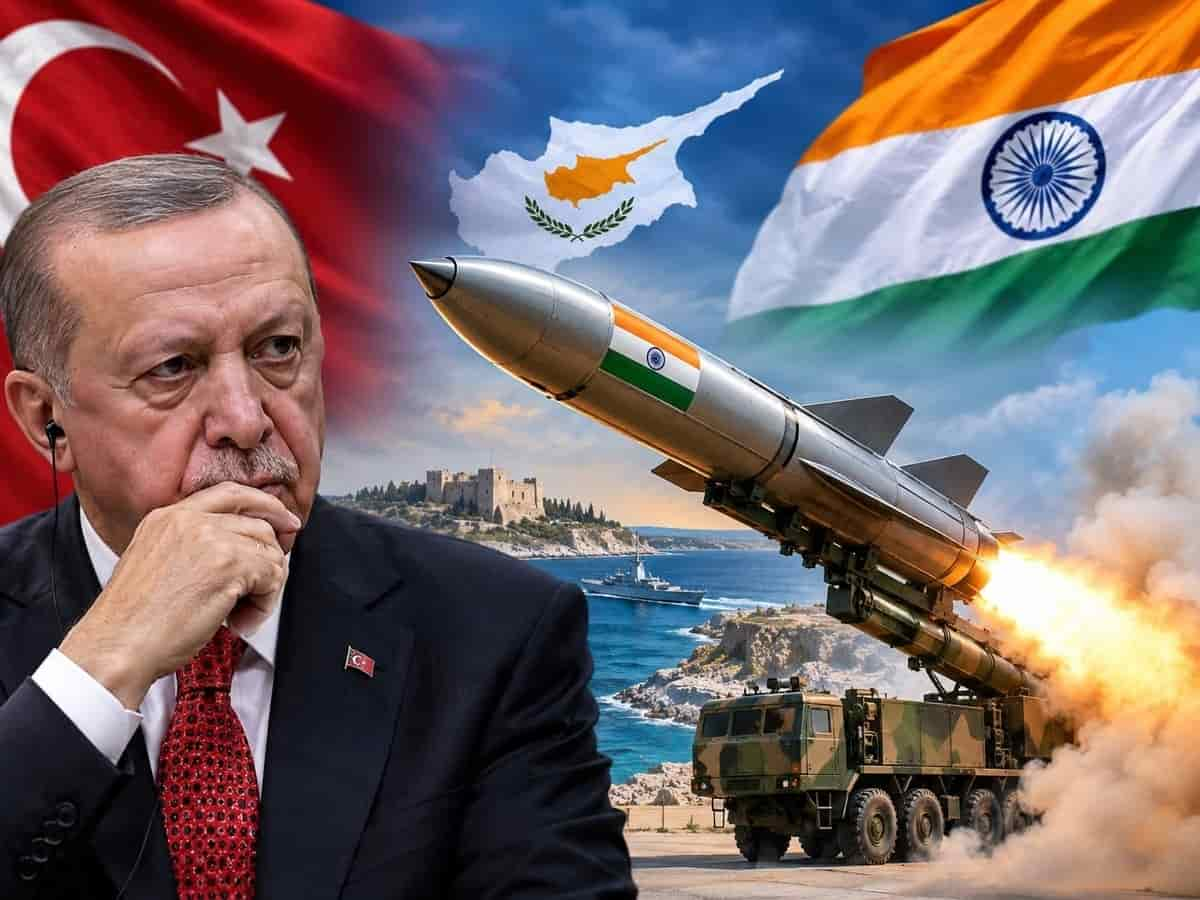
India’s indigenous supersonic cruise missile, the BrahMos, has once again sparked diplomatic ripples far beyond South Asia—this time reaching the chambers of the United Nations Security Council and General Assembly in New York. Türkiye has formally flagged alarm at the UN over reports that the Republic of Cyprus is exploring the procurement of BrahMos missiles from India, specifically pointing out the weapon system’s estimated 650-kilometre strike range. Circulated earlier this month as official UN document A/81/476–S/2026/881, Ankara’s complaint underscores growing Turkish unease as New Delhi steadily expands its strategic footprint and defence exports across the Eastern Mediterranean.
What Türkiye’s Letter to the United Nations States
The diplomatic escalation stems from a letter dated November 2, 2026, submitted by Türkiye’s Permanent Representative to the UN, Ahmet Yildiz, and circulated to all General Assembly and Security Council members on November 4. Attached to the submission was a detailed dossier authored by Murat Soysal, representative of the self-declared Turkish Republic of Northern Cyprus—an entity recognized solely by Ankara. The communication specifically cites Cypriot President Nikos Christodoulides’ official visit to New Delhi in May 2026, noting that the trip deepened bilateral defence cooperation and led to reported arrangements for acquiring BrahMos supersonic missiles with an estimated range of 650 kilometres. Although neither New Delhi nor Nicosia has announced a signed contract, Ankara warned that introducing long-range supersonic strike capabilities onto the divided island threatens regional peace and stability.
Why a 650-Kilometre Range Rattles Ankara
Strategic and military analysts point out that Türkiye’s anxiety boils down to simple geography. Located roughly 70 to 80 kilometres off Türkiye’s southern Mediterranean coast, Cyprus sits within easy reach of key Turkish naval bases, airfields, energy corridors, and major cities across southern and central Anatolia. A supersonic cruise missile capable of travelling up to 650 kilometres at nearly three times the speed of sound (Mach 2.8) would give Nicosia a formidable deterrence umbrella covering almost the entire Eastern Mediterranean basin as well as large parts of the Turkish mainland. In its UN filing, Ankara placed the BrahMos discussions alongside Cyprus’s broader military modernization—including acquisitions of Israeli Barak MX air defence systems and Merkava tanks, French armoured vehicles, and Greek Leopard tanks—accusing the Cypriot government of turning the island into an external military hub.
Growing India-Cyprus Ties and the Geopolitical Backdrop
For observers in New Delhi, Mumbai, and across India’s defence establishment, Türkiye’s UN objection is also viewed through the prism of shifting regional alignments. Over recent years, Ankara has repeatedly raised the Kashmir issue at international forums and extended overt diplomatic and military backing to Pakistan, including during heightened India-Pakistan tensions. In response, India has systematically strengthened partnerships with Greece, Armenia, and the Republic of Cyprus—countries that share longstanding territorial and security disputes with Türkiye. Following Prime Minister Narendra Modi’s landmark engagement with Cypriot leadership and President Christodoulides’ May 2026 visit to India, bilateral defence consultations have gained noticeable momentum alongside India’s push to turn BrahMos into a premier global defence export after landmark deliveries to the Philippines.
What Happens Next at the UN and in New Delhi
While Türkiye’s letter has placed the speculated BrahMos talks on official UN record, diplomatic observers note that Cyprus, as a sovereign United Nations member state and European Union nation, retains the legal right to procure defensive systems for its national security. Neither the Ministry of External Affairs nor the Ministry of Defence in New Delhi has issued a formal reaction to Ankara’s UN communication so far. Yet the very fact that unconfirmed discussions over a 650-kilometre BrahMos variant prompted a formal Security Council circulation illustrates how rapidly Indian-made weaponry is reshaping strategic calculations from the Indo-Pacific to the Mediterranean.