North India Statesman

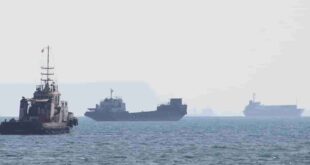
Military tensions in the Persian Gulf have sharply escalated once again after Tehran announced that its air defence forces intercepted and destroyed an American-made unmanned aerial vehicle over the Strait of Hormuz on Tuesday, November 17, 2026. According to an official statement released by the public relations office of the Islamic Republic of Iran Army and broadcast via state media IRIB, indigenous air defence systems operating under the country’s integrated air defence network detected, engaged, and brought down a US-made LUCAS attack drone above the strategic waterway. Local residents on Qeshm Island—located directly inside the Strait of Hormuz off Iran’s southern coast—reported hearing multiple loud explosions northwest of Qeshm city, while eyewitness accounts cited by Iranian media described columns of smoke rising into the sky following the interception. While the Pentagon and U.S. Central Command (CENTCOM) have yet to issue an official confirmation regarding the reported loss of the aircraft, the incident underscores the volatile security climate gripping the world’s most critical energy chokepoint.
What Happened Over Qeshm Island and the Strait of Hormuz?
The reported downing of the LUCAS drone did not occur in isolation; rather, it formed part of a rapid sequence of aerial engagements across the Gulf region over a 24-hour window. Hours before the Iranian Army announced the interception over the Strait of Hormuz, Iran’s Islamic Revolutionary Guard Corps (IRGC) claimed that its Aerospace Force air defences had separately shot down a U.S. MQ-1 Predator reconnaissance and strike drone south of Qeshm Island. Iranian military statements characterized the MQ-1 interception as the latest in a series of downed American drones since hostilities flared earlier this year. Simultaneously, U.S. Central Command reported that American and partner forces had intercepted multiple Iranian one-way attack drones launched toward Bahrain, where the U.S. Navy’s Fifth Fleet is headquartered. Although Bahrain’s Interior Ministry subsequently issued an all-clear notice while keeping precautionary alerts active, the simultaneous exchange of drone interceptions highlights how precarious the military standoff between Washington and Tehran has become.
What Is the US-Made LUCAS Drone?
Defense analysts note that the specific aircraft named in Tehran’s announcement—the LUCAS drone—carries notable tactical significance in modern unmanned warfare. Standing for Low-Cost Uncrewed Combat Attack System (also referred to as Low-Cost Unmanned Combat Attack System), LUCAS is an expendable, one-way attack loitering munition developed for the U.S. military. Unlike high-altitude, multi-million-dollar strategic surveillance platforms such as the RQ-4 Global Hawk or armed MQ-9 Reapers, loitering munitions like LUCAS are designed to be deployed in larger numbers at a fraction of traditional aerospace costs. Engineered to patrol contested airspace, identify radar or naval targets, and strike with precision, such systems represent a major shift in how Washington projects unmanned deterrence in congested maritime zones. However, because low-cost loitering munitions fly at lower altitudes and slower speeds than stealth aircraft, they are also primary targets for layered shore-based air defence batteries stationed along Iran’s southern Hormozgan province and nearby islands.
Stalled Diplomacy and Maritime Flashpoints in 2026
The latest aerial confrontation comes against the backdrop of deteriorating diplomatic efforts to stabilize shipping lanes in the Persian Gulf. Following the outbreak of direct military clashes between the United States, Israel, and Iran in late February 2026, Tehran carried out retaliatory strikes targeting regional military installations before both Washington and Tehran signed a preliminary memorandum of understanding in June. Subsequent negotiations aimed at establishing clear rules for safe and unimpeded maritime navigation through the Strait of Hormuz have stalled over fundamental disagreements regarding naval patrols, sanctions, and regional security guarantees. In recent days, commercial shipping in the eastern Strait of Hormuz has faced heightened danger, including reports of naval mine strikes and missile incidents involving commercial tankers. For Tehran, publicizing the interception of American drones serves both as a domestic demonstration of its indigenous air defence capabilities and as strategic leverage while diplomatic talks remain deadlocked.
Why the Strait of Hormuz Matters for Global Energy and India
Any military escalation near Qeshm Island immediately reverberates across global financial and commodity markets because roughly one-fifth of the world’s seaborne petroleum and a massive share of global liquefied natural gas pass through the narrow Strait of Hormuz. For India—the world’s third-largest crude oil importer—stability in this waterway is directly tied to national energy security, inflation control, and trade logistics. Over 60 percent of India’s crude oil imports and a substantial portion of its LNG shipments from suppliers in Iraq, Saudi Arabia, the United Arab Emirates, and Qatar transit through the Strait of Hormuz every day. Beyond energy prices, thousands of Indian mariners serve aboard commercial tankers navigating Persian Gulf waters, making maritime safety an urgent humanitarian and diplomatic priority for New Delhi. Energy economists warn that sustained military friction or rising war-risk insurance premiums in the Gulf could quickly push Brent crude benchmarks higher, placing upward pressure on India’s import bill and domestic fuel logistics if diplomatic de-escalation does not resume soon.