North India Statesman
 The divine festival of Sharadiya Navratri commences annually on the Pratipada Tithi of Shukla Paksha in the sacred Hindu month of Ashwin. In 2026, the nine-day spiritual celebration begins on Sunday, October 11, marking the arrival of Goddess Durga into homes and temples across Varanasi, Mathura, Kolkata, and devotion-filled households nationwide. Central to this divine period is the sacred rite of Kalash Sthapana, also termed Ghatasthapana, which signifies inviting cosmic energy, prosperity, and peace into the domestic sphere. Astrological calculations define the primary morning Ghatasthapana Muhurat on October 11, 2026, between 06:19 AM and 10:12 AM, offering an expansive window of three hours and fifty-three minutes. For devotees unable to conclude rituals in the early hours, the universally auspicious Abhijit Muhurat remains active from 11:44 AM to 12:31 PM, ensuring an immaculate astrological alignment to consecrate the holy urn.
Essential Samagri List Required for Setting Up the Sacred Kalash
Conducting the ritual strictly according to Vedic traditions requires assembling pure puja samagri beforehand to avoid interruptions during the sanctification process. Devotees need a wide-mouthed earthen dish, clean and fertile soil, whole barley or jowar seeds, and a spotless Kalash made of copper, brass, or pure clay. Pure water and holy Ganga Jal form the base of the offering, accompanied by an unbroken betel nut (supari), clean coins, whole turmeric root, unbroken rice grains (akshat), durva grass, and vermilion (roli). Additionally, arrange five or seven fresh leaves of mango or Ashoka, a whole coconut containing natural water, green cardamoms, cloves, pure cow ghee, a sacred red cloth (chunri), sacred red thread (moli/kalava), fresh seasonal flowers, fruits, and traditional sweet batashas for prasad.
Step-by-Step Kalash Sthapana Vidhi to Establish Maa Durga at Home
The installation ritual begins at dawn with personal purification by bathing before sunrise and putting on clean traditional garments. Thoroughly cleanse the home temple or designated northeast worship altar, sanctifying the area with sprinkled Ganga Jal. Place a sturdy wooden chowki, drape it with an unused red cloth, and seat an idol or sacred portrait of Maa Durga upon it before offering her solah shringar adornments. Light a steady cow-ghee lamp in front of the deity and present betel leaves, betel nuts, cloves, sweets, and seasonal fruits in reverence. Next, fill the shallow earthen container with clean soil, spread barley seeds evenly, cover them with a light secondary layer of moist earth, and gently sprinkle fresh water over the bed to initiate the nine-day sprouting cycle.
What Goes Inside the Kalash and the Correct Placement of Coconut
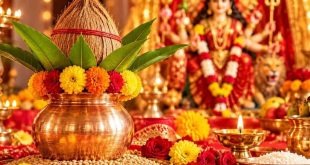
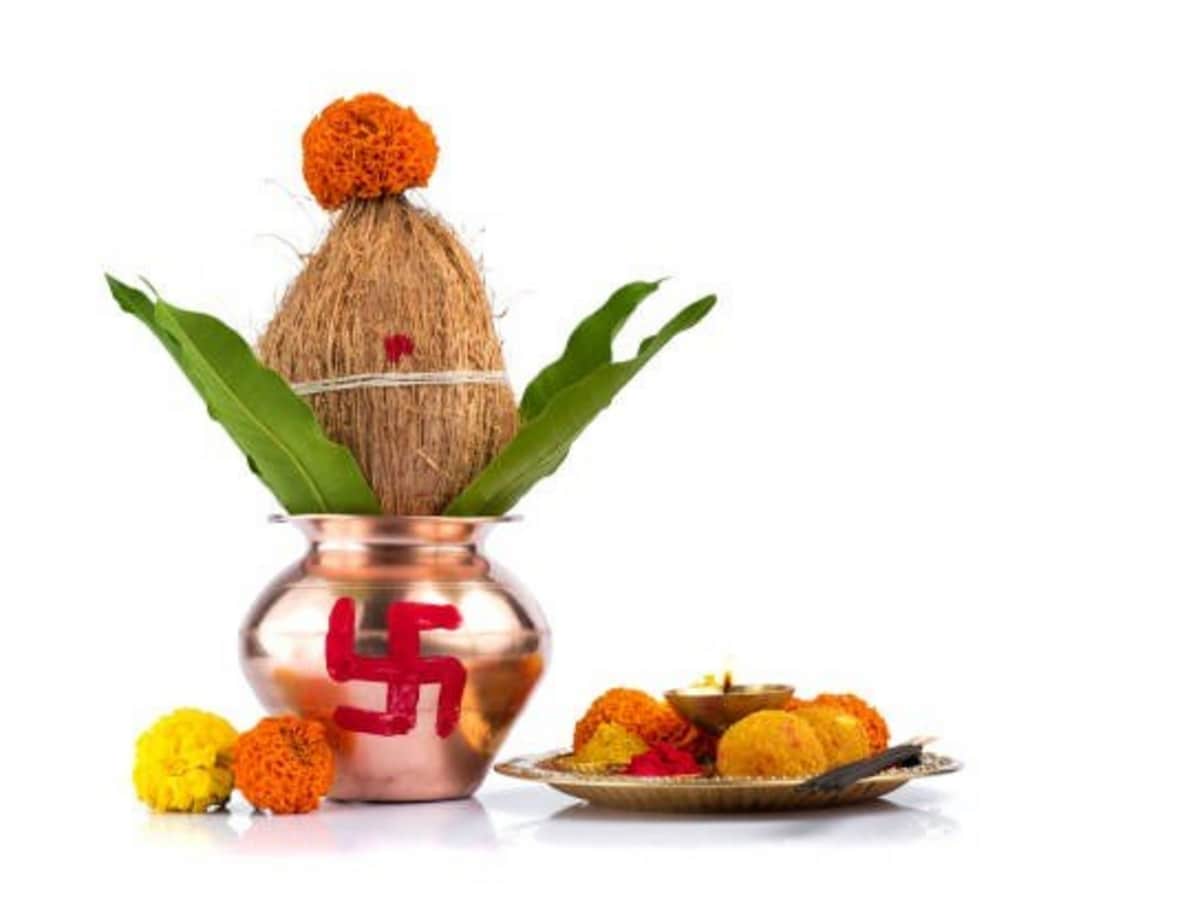
The sanctification of the main vessel involves deep symbolic offerings, transforming a simple metal pot into an embodiment of universal divine energy. Fill the copper or clay Kalash with pure water infused with drops of Ganga Jal, then place inside an unbroken betel nut representing wholeness, a coin symbolizing perpetual financial stability, a raw turmeric knot for auspiciousness, whole akshat grains for perfection, and cloves and cardamoms for divine purity. Drape the neck of the vessel with five or seven fresh mango or Ashoka leaves pointing outward, then place an unpeeled coconut wrapped tightly in red chunri and secured with moli across the top. According to Shastras, the mouth or sprouting eye of the coconut must always face toward the devotee seated in prayer or point upward toward the heavens, never facing away, ensuring auspicious spiritual dividends.
Sacred Invocation Mantra to Chant During Kalash Consecration
While establishing the Kalash firmly upon the bed of sown barley, devotees invoke the cosmic presence of the Holy Trinity, sacred oceans, and divine scriptures into the vessel through the traditional Vedic shloka: “Om Kalashasya Mukhe Vishnu: Kanthe Rudra: Samashritah, Mule Tvasya Sthito Brahma Madhye Matrganah Smrtah. Kukshau Tu Sagarah Sarve Saptadvipa Cha Medini, Rgvedo’tha Yajurvedah Samavedo Hyatharvanah.” Chanting this verse invites Lord Vishnu at the rim, Lord Shiva at the neck, Lord Brahma at the base, along with the divine Mother Goddesses, sacred rivers, and the four Vedas into your living space, safeguarding the household against negative influences throughout the holy festival.